AIDS isn’t over
Episode 10
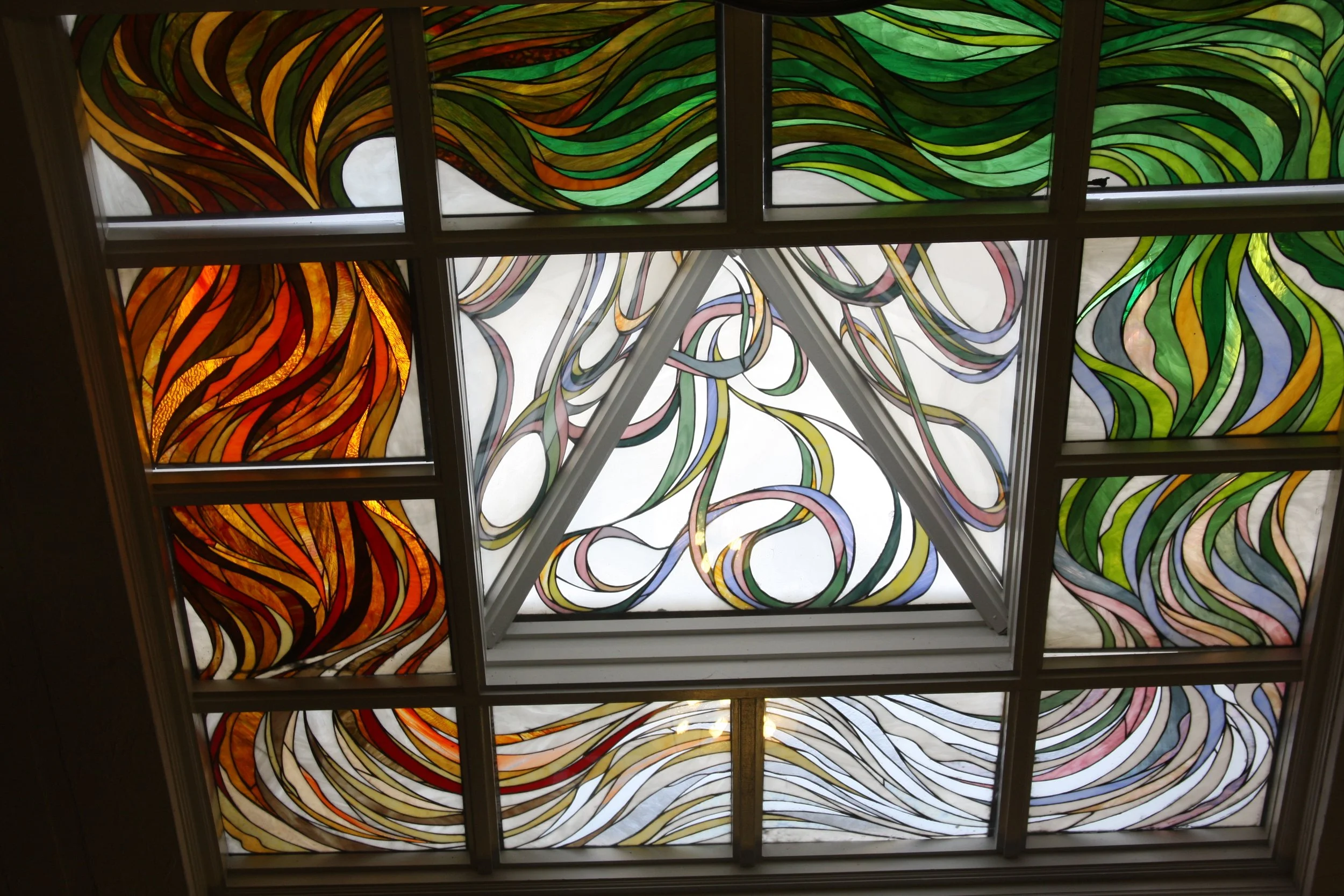
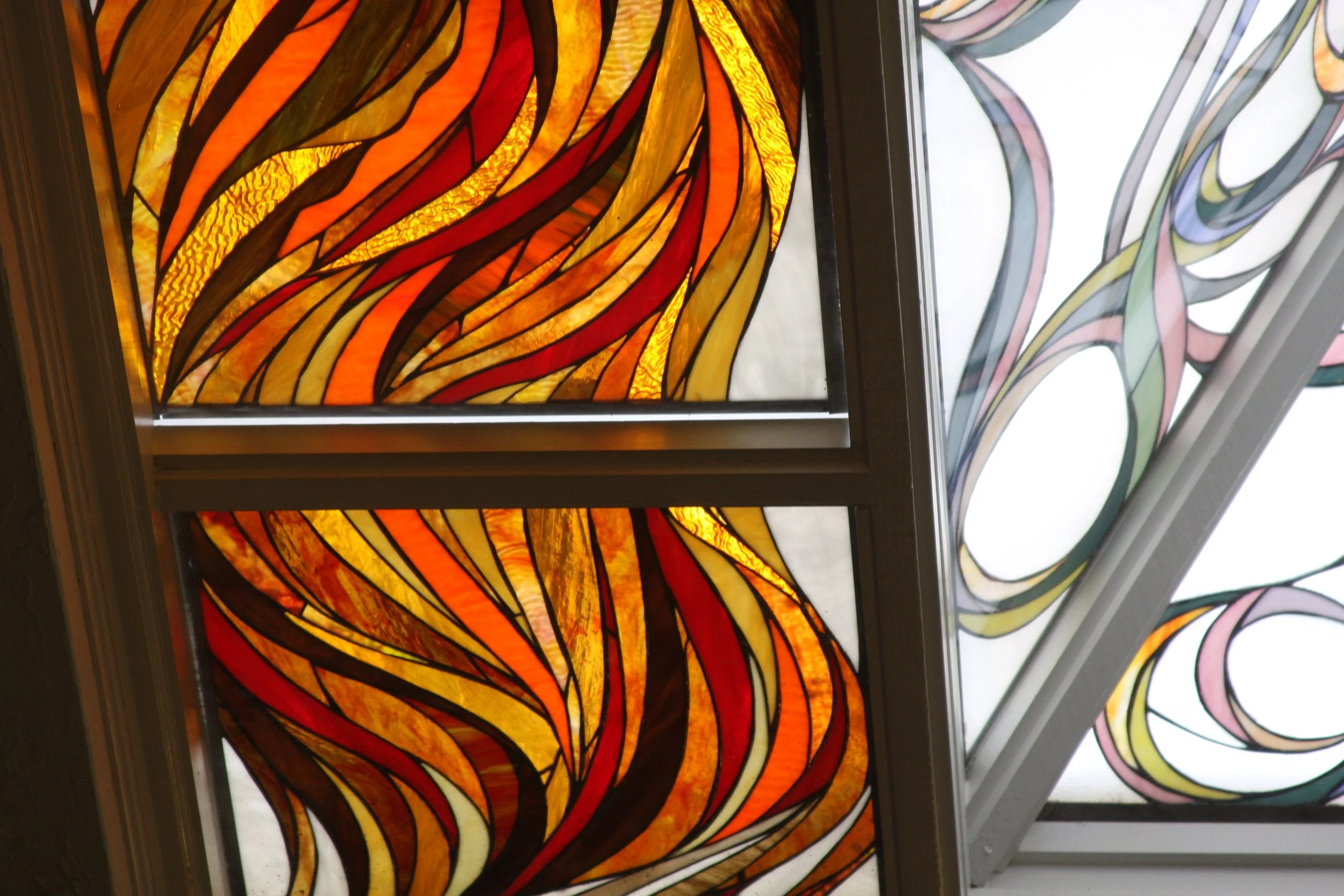
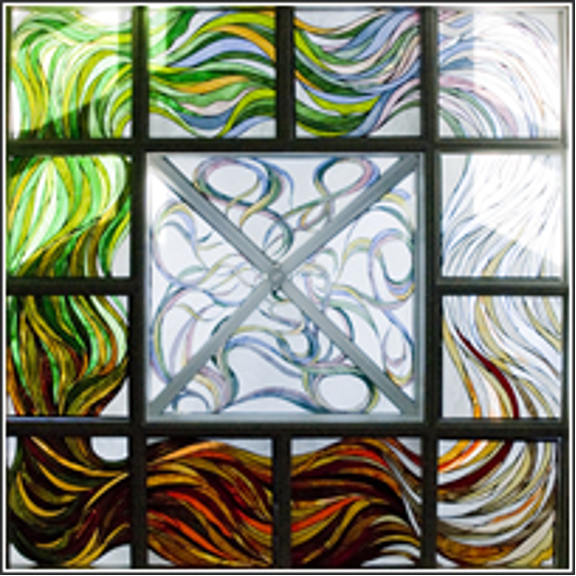
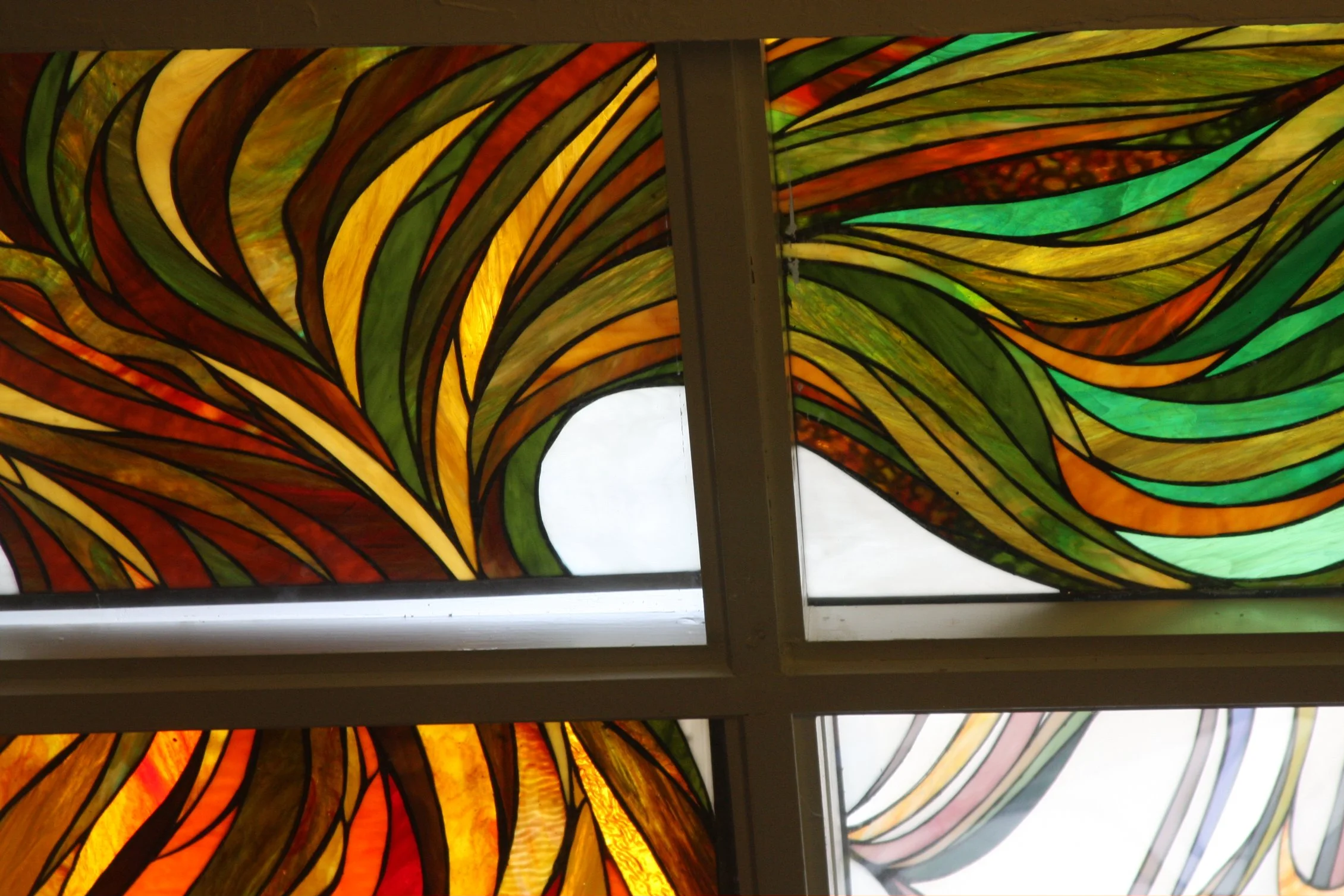
The Stained Glass Skylight – All images by Bill Wilson. Courtesy of the MCC San Francisco Collection, San Francisco Public Library. In the final episode of When We All Get to Heaven, we catch up on what’s happened in the many years between the emergence of effective treatment for AIDS in the late 90s and the fall of 2025, when we recorded this episode. We linger on a moment back in June of 1999, when Jim was still pastor and called the church to remember that AIDS wasn’t over. Because advances notwithstanding, it still isn’t over.
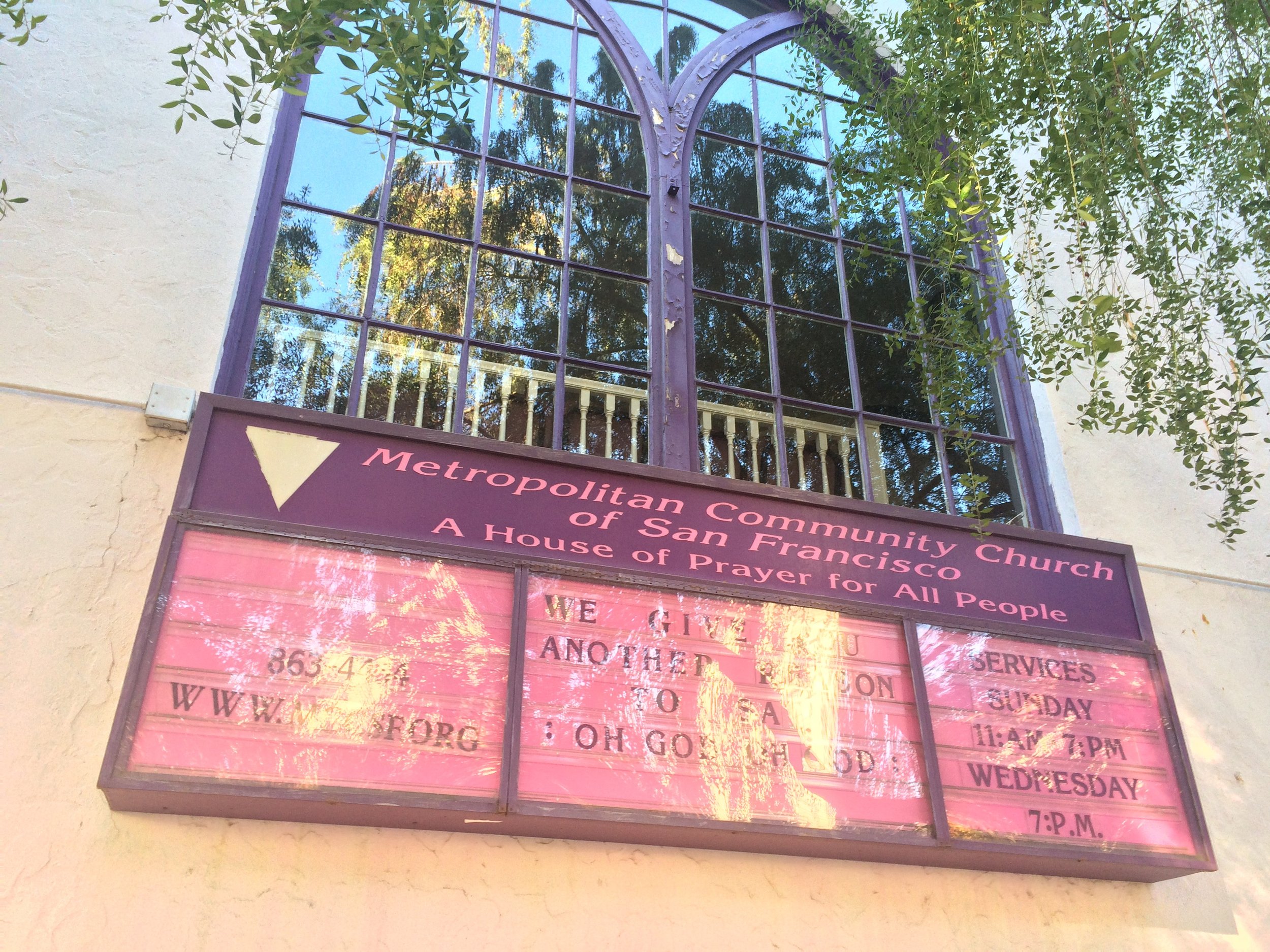
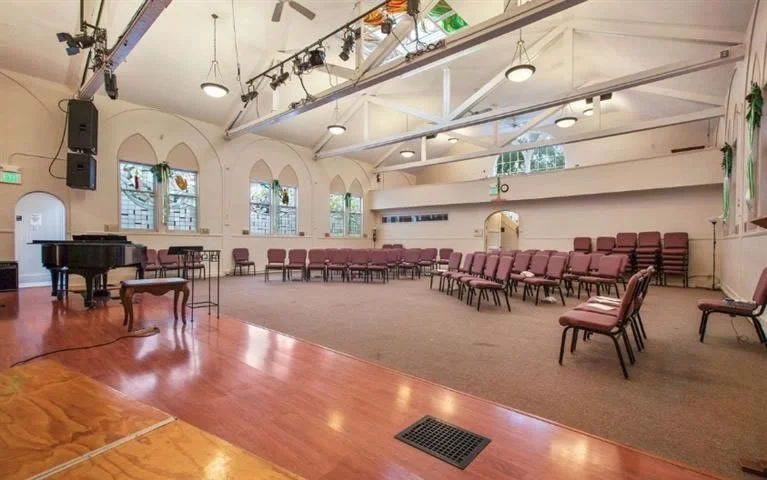
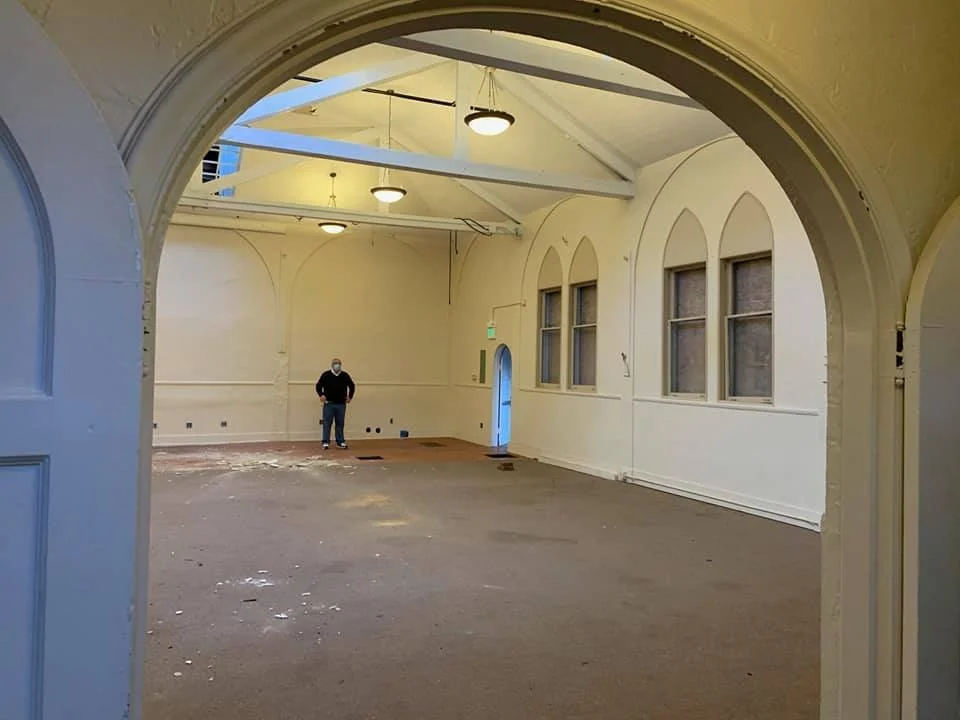
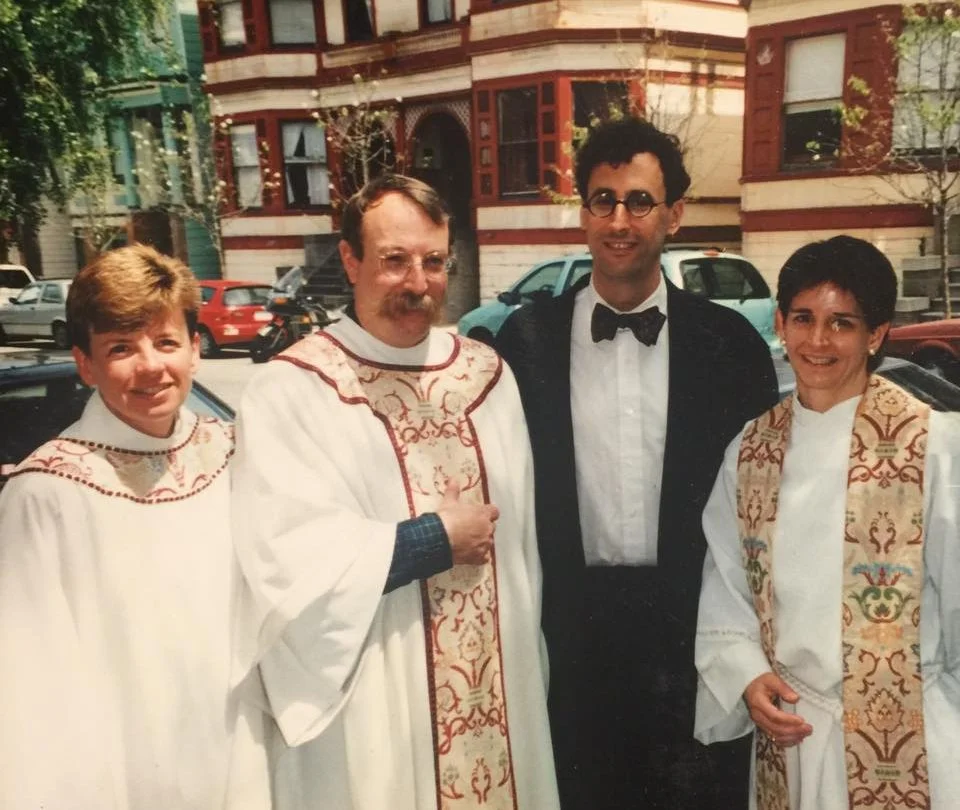
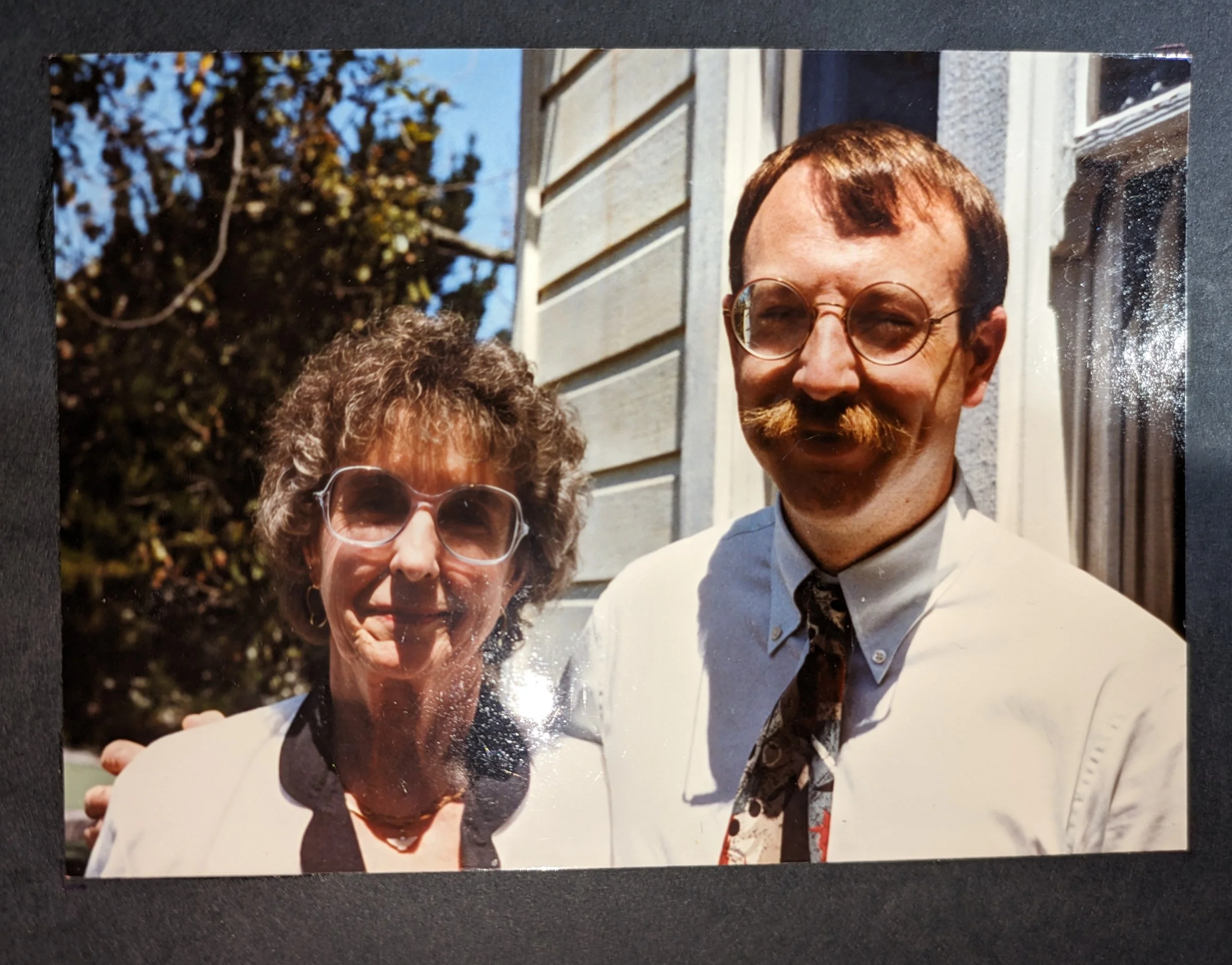
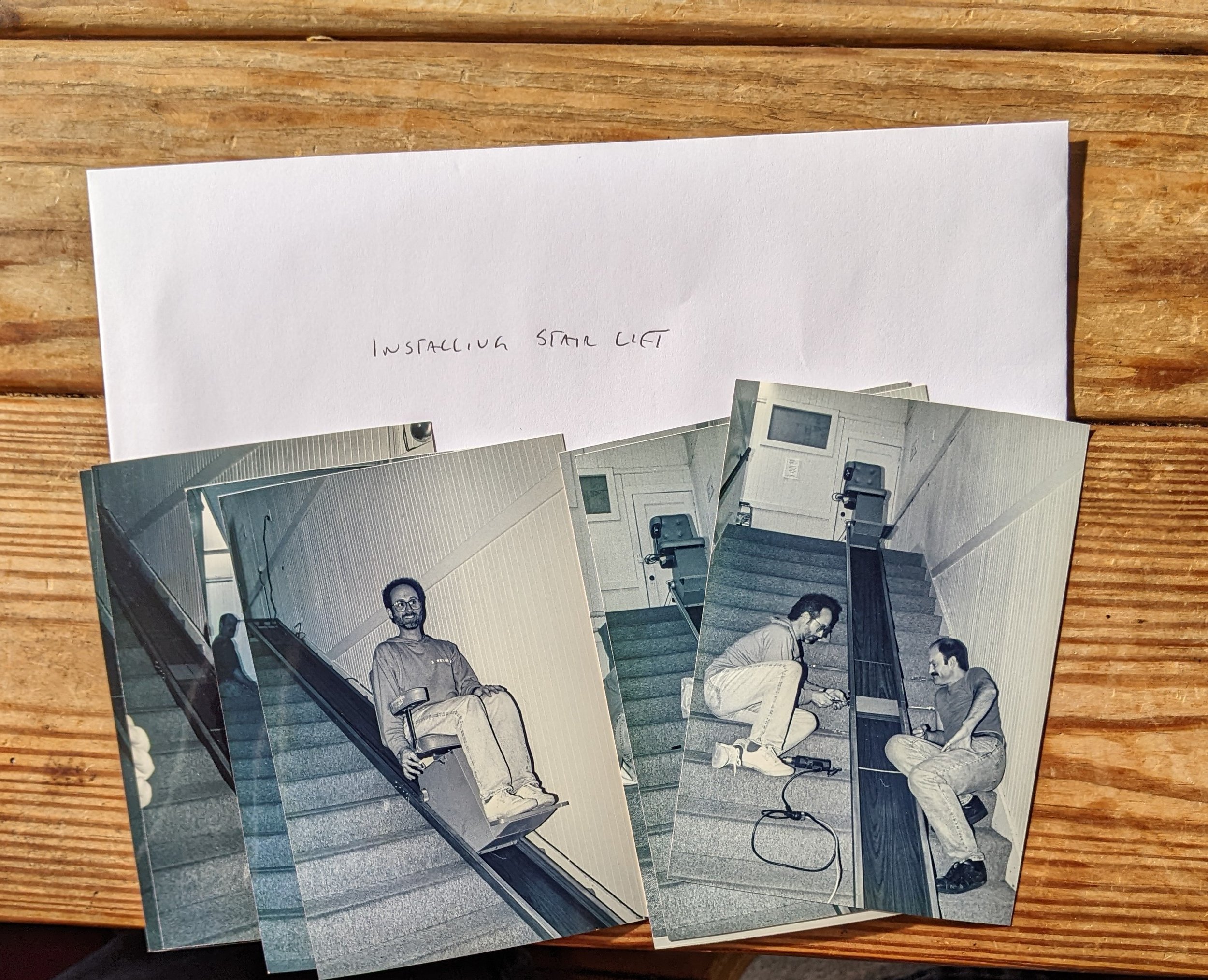
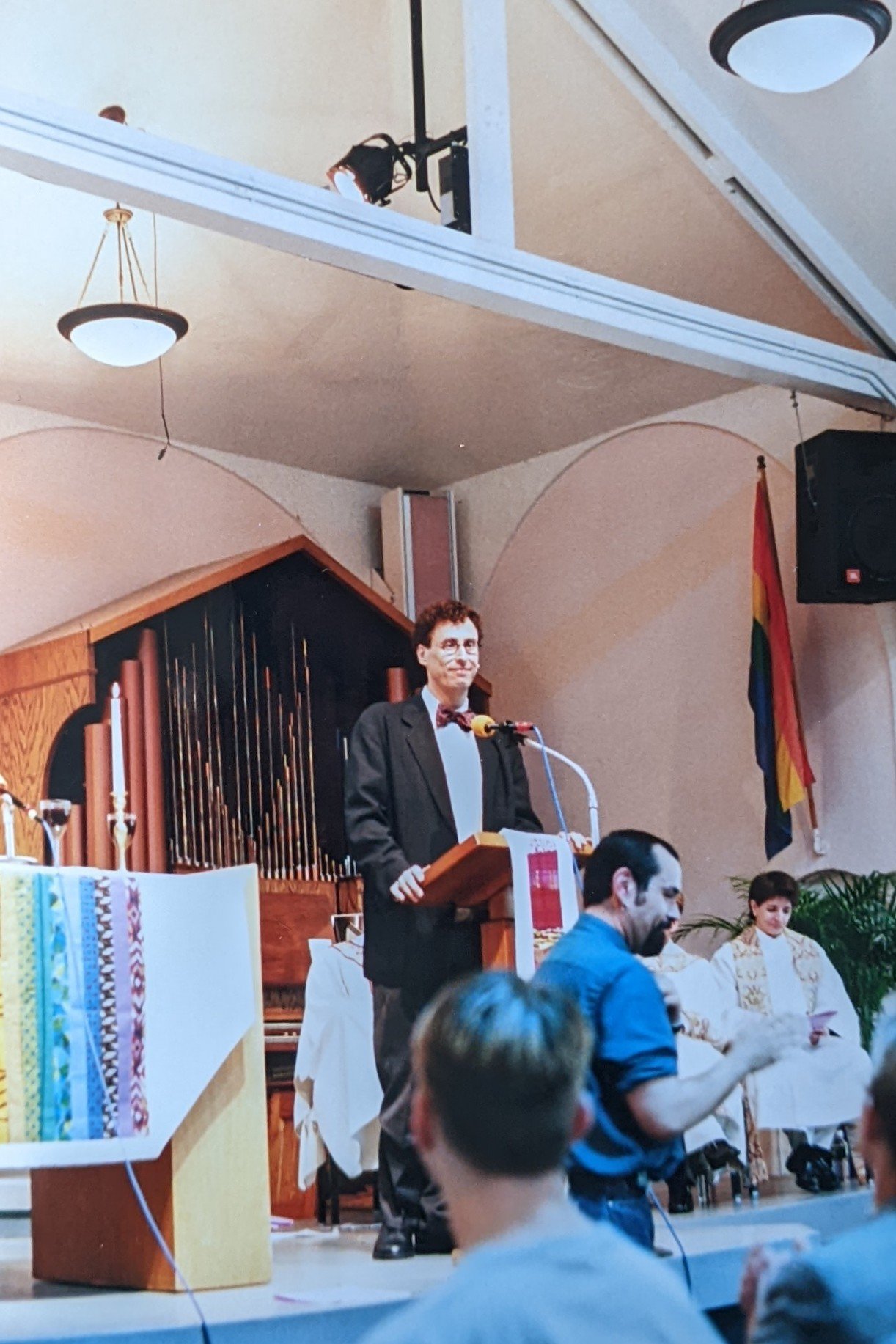
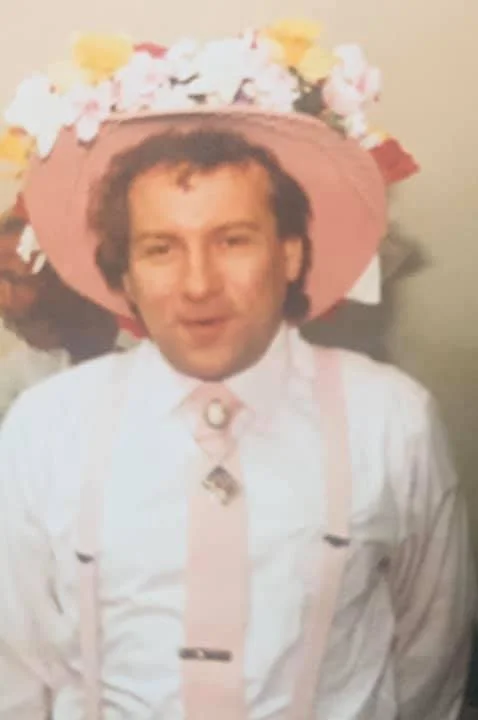
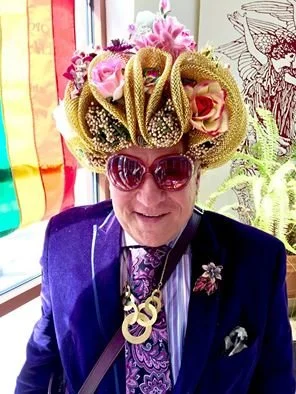
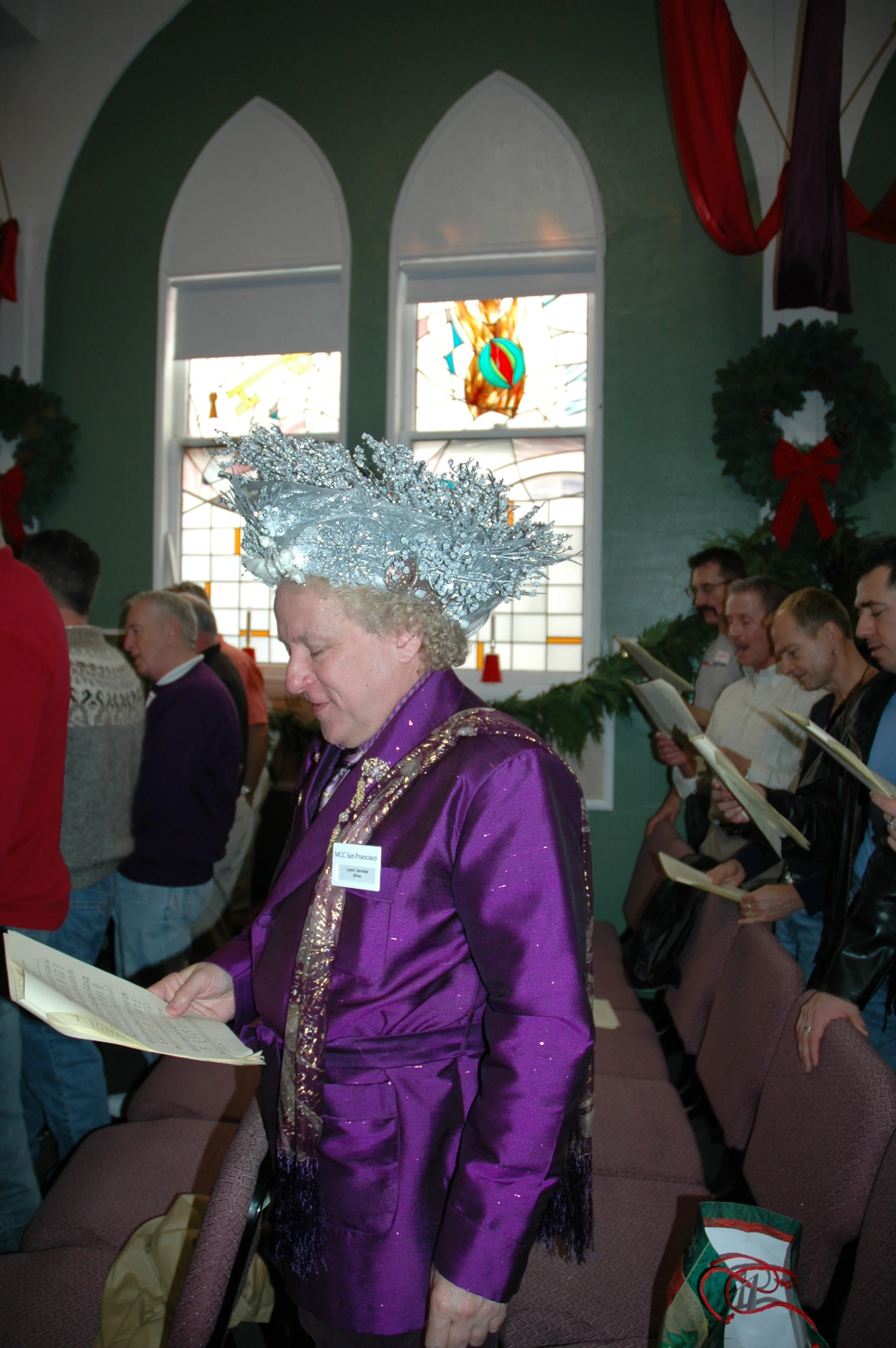
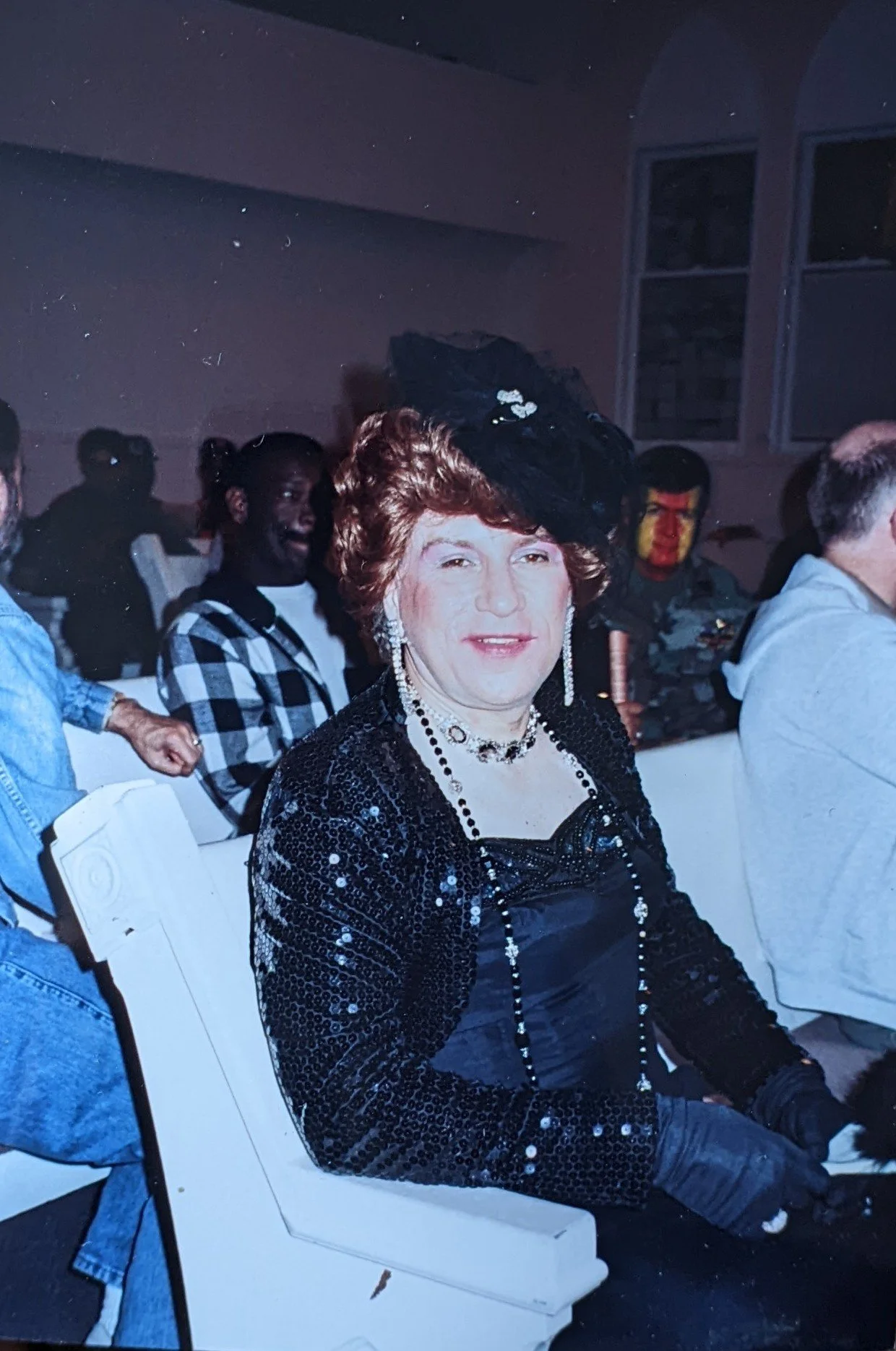
MCC San Francisco Church Mother and longest-standing congregant, Lynn Jordan, and his many easter bonnets. All are courtesy of the MCC San Francisco Collection, San Francisco Public Library.
NOTES:
For more on Gilbert Baker and the history of the rainbow flag see the Gilbert Baker Foundation
For more on Prep see San Francisco AIDS Foundation, What is PrEP?
“The Path that Ends AIDS: 2023 UNAIDS Global Update.” outlines a possible end to the AIDS epidemic.
The story of Jacob’s Ladder is in the book of Genesis chapter 28, verses 10-19
Music:
The text for “This is the Day that God Has Made” is biblical with music by Leon C. Roberts.
“We are Climbing Jacob’s Ladder” is a traditional hymn.
“This Little Light of Mine” – text traditional, arrangement by Penelope D. Gnesin.
“Song of the Soul” is by Cris Williamson and was sung by her at MCC San Francisco on April 24, 2000.
THANKS
Thanks to Dr. Judy Auerbach of the University of California at San Francisco.
Thanks to Sue Fulton for permission to use “This Little Light of Mine.”
Thanks to Cris Williamson for permission to use “Song of the Soul.”
Resources:
The Metropolitan Community Church of San Francisco – the congregation’s current website.
Metropolitan Community Churches – the denomination of which MCC San Francisco is a part.
San Francisco AIDS Foundation – a place to seek information about HIV.
POZ Magazine – a place to learn everything else about HIV (information included).
Save AIDS Research – their recent, epic 24 hours to Save Research conference with all the latest HIV research is available on YouTube through this site.
LGBTQ Religious Archives Network – the place to get lost in LGBTQ+ religious history.
TRANSCRIPT:
Episode 10 – AIDS Isn’t over
NOTE: This audio documentary podcast was produced and designed to be heard. If you are able, do listen to the audio, which includes emotions and sounds not on the page. Transcripts may contain errors. Check the corresponding audio before quoting in print.
Video: So a super early sneak peek of these condominiums at 150 Eureka Street.
Video: Music
Lynne Gerber: In the last two years 150 Eureka Street, former site of MCC San Francisco, was turned into condos. Yet another step in the gentrification in the Castro. I knew it was happening but was still taken aback a few months ago, in early 2025 when I got a text from a friend who lives in the Castro with a link to a promotional video tour made by a real estate agent.
Lynne Gerber: His text said "3.5 million dollars for 1 of 4 units. Yikes!"
Video: Now this used to be the church in the, uh, neighborhood [00:01:00]
Lynne Gerber: I watched as the video-maker took us on a tour of the transformed 150 Eureka Street. This was an early chance for potential buyers to see the units that developers had created out of the church building. The first unit he took us through was upstairs where the sanctuary's balcony was -- where an overflow crowd, or people who liked its high view, would sit during worship. I could tell because the developers kept the arched window that was the building's hallmark.
Video:Clearly you have this beautiful cathedral type window. You can notice that the finishing is also very light, bright earth tone, very California. In the kitchen here, You've got the Lutron cover plates, your big Thermador range, and the hood. Built-ins. And here you've got your big island as well.
Lynne Gerber: I almost turned it off there. It was hard to watch and I wasn't sure I wanted to see the rest. But when the guide started walking down the hall toward a bedroom, he stopped. And I stopped.
Video: actually, if I go there, you've got this. An elevator. So it's a real Otis elevator. It goes up from the garage all the way up to the roof,
Lynne Gerber: MCC San Francisco had tried for years to make 150 Eureka Street fully wheelchair accessible. Especially as AIDS spread and so many folks had new physical needs and limitations. Through the church’s archives we learned about efforts to build a ramp so people could get into the building. And about a successful campaign to purchase a stair lift. [00:03:00] Important steps toward making the building more accessible. But the funds to make it fully accessible – like, with an elevator – were just never there.
With great trepidation I sent the video to Jim Mitulski, MCC’s former pastor. In the last episode Jim had just left the congregation. That was in 2000. Since then he’s spent years serving different communities around the country. Now he's back in the Bay Area, pastoring a small, suburban church. "I don't know if you've seen this yet," I texted, "but thought you'd want to." He texted right back. "Yikes"
It was a long journey between when 150 Eureka Street was a church to 150 Eureka Street becoming condos. And this episode is the last stop on our long journey through the story of MCC San Francisco facing the AIDS crisis. We’re going to catch up on some of what’s happened in the many years between the emergence of effective treatment for AIDS and the fall of 2025, when we’re recording this. And we’re going to linger on a moment in June of 1999, when Jim called the church to remember that AIDS wasn’t over. Because it still isn’t over.
This is When We All Get to Heaven. Episode 10: AIDS Isn't Over. I'm Lynne Gerber
(If we haven't used it already, that version we like of This is the Day is from that service. The version of Leaning on the Everlasting Arms is also great.)
Lynne Gerber: In 1999, more than twenty five years before I got that the-church-is-now-condos text, Jim was still the pastor of MCC, and June had officially become Pride month. The celebrations of LGBTQ life and community had grown from a Sunday, to a weekend, to a week, to a month. And on June 20th, the Sunday before the parade, the people worshipping at 150 Eureka Street – MCC’s members and friends – sounded like a church that knew who they were and where they wanted to go -- as a church [00:04:00] and as a movement. During the announcements one congregant explained how folks could volunteer for Pride. And another explained how they could volunteer for the No on Knight campaign. California Proposition 22, known as the Knight Initiative, tried to limit legal marriage to one man and one woman. That evening there was a celebrity of sorts at the worship service -- a community celebrity.
Jim Mitulski: We're very fortunate to have with us tonight one of the heroes of our movement, uh, someone who's created a symbol that means something for us, the rainbow flag. And Gilbert Baker is here, he's the designer and creator of the rainbow flag. The rainbow flag will be hanging from City Hall tomorrow.
Lynne Gerber: It was three years after Protease Inhibitors started changing the course of AIDS and two years after Ellen Degeneres came out as gay on television. California was in the process of creating a state-wide domestic partner registry, and the gay flag was going to hang in the rotunda at City Hall the next day in celebration. It was an exciting moment to look toward the future and [00:05:00] where they were going.
But something had been happening in the Castro that made Jim want to stop, pause, and talk about where they'd been.
Jim Mitulski: There are these obnoxious little signs, oops, I betray my prejudice, all around the Castro that says AIDS is over, the war has ended. No, it has not. I beg to differ. We who live in the Castro. who have access to medications may think that AIDS is changing, and it is, but 30 million people in the world do not think AIDS is over. 30 million people who are lucky to see an aspirin for AIDS treatment do not think AIDS is over. We forget, and we must remember.
Lynne Gerber: It wasn't over. Not across the ocean, where the epidemic was spreading like wildfire. Not across the Bay, where the rate of infection among Black people was declared a state of emergency. It wasn't even over at MCC San Francisco.
Jim Mitulski: Hal Webber died this week, Many of you will not know him. Some of you will remember him. Hal was a bartender. He was beautiful. He was proud of his recovery. And, uh, he was quite, quite a spiritual man. At one time when, uh, my mother was visiting San Francisco, he was deeply appreciative of all that the church had done for him, and so he wanted to take my mother out. And so he took her to Ruth Chris's Steakhouse. And then, we went to Josie's for a play. Unfortunately, it was Jerker, which if you haven't seen, it's a little vivid.
Lynne Gerber: Let's just say the alternative title to Jerker is "The Helping Hand: A Pornographic Elegy with Redeeming Social Value and a Hymn to the Queer Men of San Francisco in Twenty Telephone Calls, Many of Them Dirty."
Jim Mitulski: After the first act, my mother took her glasses off, and just sort of [00:07:00] sat there with great poise. And then at the end of the play, she said, well, at least they didn't take our lord's name in vain. Hal died. AIDS is not over.
Lynne Gerber: It wasn't over then, and it isn't over now. When we were researching this episode, we learned that in 2023, some serious researchers, clinicians, and public health experts thought that, with the right resources and the right focus, AIDS could be over. Soon. That year, UNAIDS announced that, in their view, it was possible to end the epidemic by 2030. And they mapped out a plan to get there.
Dr. Judy Auerbach told me more. Judy's an independent science and policy consultant and a professor at the University of California at San Francisco's School of Medicine. She, like me, was trained as a sociologist. And she's been working on [00:08:00] HIV/AIDS for decades.
She explained that the emergence of protease inhibitors in the mid-90s and the profound changes they brought were just the beginning. In the years since then, the medications for the treatment of HIV have gotten better. A lot better.
Judy Auerbach: So that people on the whole who are living with HIV if they're on their medications, if they take them as prescribed, can live long and healthy lives.
Lynne Gerber: But the medications also have another use, one that they learned about more recently. A use that's been causing HIV transmission to plummet.
Judy Auerbach: At the same time, what also happened in starting around, I guess officially 2011 or so, although the research started well before that, is the, revelation that those very same drugs can be taken by people who are not infected with HIV, who do not have HIV, may be at risk of acquiring HIV. [00:09:00] If you take them in advance of exposure to HIV, you will not contract HIV.
Lynne Gerber: Let me say that again. If you take what's called Pre-exposure prophylaxis, or PrEP, before potential HIV exposure – having unprotected sex, using a questionable syringe – you have a very, very good chance of avoiding HIV infection at all. And if you forget, you can take Post-exposure prophylaxis, or PEP. Same result. I can only imagine how Stephen Clover and Ron Russell Coons and Bruce Bunger and Scott Galuteria would respond to this news. When I think of it, I hear the words "prayers answered" in Stephen Clover's bright, twinkly voice.
These truly remarkable medical advances are the basis for hope that the HIV epidemic could end. In our lifetimes. But as Jim and Judy both know, ending the HIV epidemic is not just about medication. Because medication is never just about medication. Like AIDS, it's about a lot of other things.
Jim Mitulski: AIDS revealed poverty, it revealed [00:10:00] sexism, it revealed, in terms of access to healthcare, it revealed racism, who has it and who had access to treatment, it revealed homophobia, it revealed stigma. So those are the circumstances under which HIV thrived then and thrives still.
Judy Auerbach: You can build a beautiful health system, but if you don't take care of stigma, discrimination, racism, sexism, all of that, none of that's ever gonna matter as much as you hope it will.
Jim Mitulski: When you can't talk about it, that's where AIDS does well.
Lynne Gerber: And recently, suddenly, we've found ourselves in a world where we can talk about it less and less -- the people who get HIV, the paths to transmission, prevention and treatment, and the need for resources to end it. In the fall of 2025, when we’re recording this, we've suddenly found ourselves in a world where the resources that have been there to counter HIV are disappearing, globally and locally -- and treatment and prevention and hopes for [00:11:00] an end are disappearing with them.
Judy Auerbach: But what we have right now, is an abject. dismissal, disappearance, degradation of particular people and populations, particularly transgender persons who have much more disparate rates of HIV infection than just about anybody. So that's not gonna help those people, much less the epidemic. Then you have these just absolute cuts to HIV related research, research grants. Thousands have been cut mostly in HIV. And mostly with populations who are most at risk. You have cuts to the programs, the decimation of CDCs HIV prevention programs. Um, you have cuts to, all the actual health services programs. Affordable Care Act coverage. So people with HIV are getting care under that and Medicaid too. So those are [00:12:00] real cuts to programs, to services, to research, to, financial support.
Lynne Gerber: Social threats and medical threats, as they always do, go hand in hand. And the HIV virus is waiting to exploit those threats.
Judy Auerbach: HIV is a really, really nasty, wily disease. We do not have a cure, we do not have a vaccine because it is so wily, it keeps changing, it keeps figuring out how to evade whatever we give it. And so as soon as the drugs are out of somebody's body, the virus can regenerate to such a level that people are gonna start getting sick again, just like they did back in the early days you've been documenting with the church.
Lynne Gerber: No one who lived through that wants to go back there. Ever.
Lynne Gerber: So back on that Sunday, in 1999, those fliers in the Castro saying AIDS is over – they were one way of saying we don’t want to go back there. It’s done. Let’s close the door and move on. But Jim wanted to go back to the days before treatment in memory so no one would have to go back there in fact. He wanted to remind people what they had lived through as a community. Because part of what they lived through was the experience of suffering alone -- of being [00:13:00] sick, and dying, of losing people , of yelling at people in power, or into the void -- and getting silence back. He didn't want the people who had suffered in 1989 and were benefiting from advances in 1999 to become the people who were silent when and where AIDS continued. Because he knew it would continue.
He reminded them by preaching about the connection between the earth and the heavens, between people and angels, between the congregation that gathered at 150 Eureka Street and the God -- or the gods or the spirit or the spirits -- that met them there.
He started with a biblical text, a story from the book of Genesis about a man named Jacob and a vision he had of a ladder to heaven. Jacob was wandering through a strange land in exile, far from home. And in his wandering he came upon a place to rest.
Jim Mitulski: He comes to a certain place. This is one of those expressions in the Hebrew scriptures, a certain place. [00:14:00] Certain places are places where God is revealed. The Castro is a certain place.
Lynne Gerber: When Jacob found his certain place, the story goes, he laid his head on a stone and fell asleep.
Jim Mitulski: When you are grieving, sometimes even a stone can feel like a pillow. How many here have slept in hospital rooms, sitting up straight, next to loved ones? I know there's some here. A rock felt like a pillow to him in his isolation, in his anxiety.
Lynne Gerber: And when Jacob slept, with a stone for a pillow, he had a dream, of a ladder going up to heaven. A ladder with angels ascending and descending. A place where God met Jacob and made him a promise, a promise that God would not leave him
Jim Mitulski: When God says to us, I will not leave you until we're done. If you've ever been sick and not, we're not sure about what the [00:15:00] outcome of that would be. God's voice assuring you, I will be with you all the way from this life, in that mysterious and beautiful sacred passage, and into the next, where I will receive you.
Lynne Gerber: Jacob saw angels and heard promises in his dream. And when he woke up, he remembered
Jim Mitulski: Jacob wakes up and says, Surely God is in this place. And I didn't know it. This is one of the most beautiful phrases in the Bible. Surely God is in this place, and I didn't know it. Sometimes we're able to say it while it's happening. Surely God is in this place. Thank you, God. And sometimes we don't know till we've been through something very difficult that God has been there with us. It's a revelation to us and sometimes to others. Surely God is in this place, and I did not know it.
Lynne Gerber: Jacob called the place Beth-el. The House of God. The Gate of Heaven.
Jim Mitulski: I don't believe that churches are special [00:16:00] places where God can be found alone. God can be found anywhere. One rabbinic tale said that anywhere a person prays, a ladder springs up to heaven. And that is a sacred place. And the angels ascend and descend and sing songs of praise that assure us of God's faithfulness. But it is amazing when a church does become a gate of heaven. A place where we know when we come together, something greater than we can make happen on our own takes place. When the spirit is outpoured in life changing and inspiring ways, for many years, difficult, painful, hopeless feeling years, this church was none other than the gate of heaven.
Lynne Gerber: When we've asked people who lived through those years at MCC about what made them so powerful, for many it was how spiritually visceral they were; the intense, undeniable [00:17:00] experience of something bigger than themselves. What some would call the experience of God. And it was about sharing that experience with people whom they loved, people they were losing, and people who were suffering.
PATRICK HORAY:
I looked out into the congregation and I saw so many faces looking up with such. Intense hope, uh, for healing, for a connection with God, whatever that is. a yearning, there was just a tsunami of yearning
JIM MITULSKI:
Part of what I think the miracle, if you will, was, still is, God does meet us.
PATRICK HORAY:
I, started to feel something. –which was a response. it felt like it, crashed into the room and embraced all the people that were yearning. It was a symphony
JIM MITULSKI:
I wasn't Begging God to come there. I was trying to draw to our attention and to God's: look! We kept our appointment Here we are. So meet us.
PATRICK HORAY:
And it was an echo of the yearning of that extreme time where Jesus was at that moment when he was with his friends.
Kevin Fong: I'll use this word sanctuary. The fact that we were able to be this place of peace of healing, of acceptance and even joy in the midst of all of the devastation that was happening around us. To walk down Castro Street at that time, It was just utterly devastating.
PENNY NIXON:
I mean, you're in survival. really you're going to date that person? Wait, we got a call. So and so's dying at the hospital. I got to supervise this intern. the toilet's overflowing. I mean. Somebody just passed out. I mean Mm hmm. Yeah. It was constant, you couldn't focus on one fire for very long because there were so many others that you had to tend to lest those get out of control. It was such a suspended reality.
JIM MITULSKI:
It was painful. It was painful to watch our friends die. It was painful to watch people become ill. People were afraid. and this is, you know, you know, when AIDS was not treatable. I mean, really not treatable. It was ugly. Okay. painful, ugly, hard, but sometimes if you walk into that and you do it together, there is a power.
KEVIN FONG:
And so when we did sing We were singing for our lives. we were singing for their lives. We were singing because this might be their last Sunday here. And we wanted to make it the most meaningful, the very best experience of, of community, of God, of heaven, that we could muster up.
PATRICK HORAY:
it convinces me that there is something sacred that's possible. Probably in every moment.
JIM MITULSKI: to find yourself at 150 Eureka street in 1989 meant you had to travel to get there. I don't just mean to get out of the subway that night. It meant that we came from all over the country to be there. And we had traveled some distance from our families, some emotional distance. We'd come out, usually ended up there by accident. And there wasn't a map, and there wasn't an internet either. You struggled to get there and it felt like a homecoming.
And I, I still believe that, um, God met us there, you know, uh, who could say no to us and to people like us?
Lynne Gerber: Not all churches are able to conjure so vivid an experience of the sacred. They don’t always feel like a gate of heaven. Especially for queer people. But for many people who could not find that gate anywhere else, during some very hard years, this one did.
Jim Mitulski: How is it that a tiny little church on Eureka Street could lose 500 members in a 10 year period and grow at the end? Be a church of a hundred that ends up as a church of 500 because this is the gate of heaven. People came here to find solace and comfort, to hear songs of praise. This is part [00:23:00] of our history. We are a gay church in 1970. We are an AIDS church in 1990. I don't know what kind of church we'll be in 2010, but if we keep putting ourselves out there, we can still be the gate of heaven in ways that we can't even conceive of.
Lynne Gerber: When MCC San Francisco moved from 150 Eureka Street, Lynn Jordan, the longest-standing congregant, bid farewell to the walls.
Lynn Jordan: Moses had conversations with a burning bush. I have them with the walls of this church. Comparing notes had become a spiritual practice. Walls. Can you believe we've been hanging around together for 35 years? You have seen a parade of my husbands and assorted boyfriends over the years, and we know where the bodies are buried.
Lynne Gerber: MCC San Francisco left Eureka Street twice. The first time in 2006 and the second time in 2015. At the last service, in 2015, Lynn gave his tribute to the building. We didn't have a recording, so I asked [00:24:00] him to read it to me.
Lynn Jordan: If I have not said it before, I apologize for calling this place a certified dump. I should have been more polite and said it was aesthetically challenged.
Lynne Gerber: The building had been a bit of a wreck since they first purchased it from the Voice of Pentecost church in 1979. Originally built in 1902, it was structurally questionable, religiously funky, and, yes, aesthetically challenged. But they had the money for a deposit and hopes for a financially sustainable future. Over the years, bequests from congregants kept the building afloat, allowing them to pay off their mortgages. But they never quite got to the place where its looming structural issues could be addressed and resolved. It was always a battle against time.
Lynn Jordan: And I need to let you know that I forgive the church for the chunks of plaster that were falling from the ceiling during worship services. Believe me, the congregation quickly learned to duck and [00:25:00] cover knowing it was not manna raining down from heaven.
Lynne Gerber: After making it work for many, many years, the building's needs got bigger and the congregation got smaller. Eventually the city caught up with them and declared the building unsound. So they had to stop meeting there. They left for the first time in 2006, but they kept the building and hoped they could figure out how stay. That's when boxes of tapes were put in a pile to be tossed. And when Steve, from episode one, saw them, retrieved them, and stored them under the floor of the sound room.
Lynn Jordan: And walls, without question, we were more than just survivors, just holding on all those years of the hello, goodbye years living on borrowed time. We are the church with aids. We are the church alive, three to five memorial services a week. Our grief and loss [00:26:00] reflected in the rainbow colors of the stained glass windows.
Lynne Gerber: In 2008 the church came back to Eureka Street. They had addressed the most egregious issues, and agreed with the city that they would only use the ground floor. The upstairs was too dangerous. In 2011, when Steve showed me the tapes, there was reason for hope that the building could remain MCC’s home. But by 2015 those hopes were gone. Reality needed to be faced. The congregation had shrunk and the building was falling apart. The church had to imagine a different future for itself.
Lynn Jordan: Time to take a deep breath as I reflect on some of the community life lived while we're at 150. Eureka. Cuban refugee re resettlement program, Act Up the Metropolitan Community Theater, HIV AIDS Support Groups, AIDS Ministry Teams, AZT,
[ducked under Lynne’s narration] rituals of remembrance. The spirit of women [00:27:00] alive in the world. A celebration of women's spirituality and culture, including a vulva service, a queer Tupperware party, wearing our finest Easter bonnet women's spirit and women's song. Men's spirit groups, men's, …
Lynne Gerber: They sold the building with enough money to figure out what was next. But not with enough money to buy a new building in San Francisco's outrageously priced real estate market. They met in a community center, in other churches, and over zoom in a new epidemic. They became a congregation in exile.
We were a church always on the move in the direction of being the church alive and not one to stand still. Or stand in the silence of inaction. MCC was more church coming.
Lynne Gerber: Today MCC is a church where transformation still happens -- on a smaller scale, responding to new crises, imaging [00:29:00] and re-imagining what it means to be a queer church in a moment of intense change. They meet in a chapel at an Episocpal church, with some folks there in person and some folks on zoom. They have brunch together, have social events in coffee shops and bars, and march together at public protests. They hold fundraisers for other community groups. Most of the folks who show up have been showing up for a long time. But when I was last there a few weeks ago, in the fall of 2025, at their annual homecoming service, they welcomed a new member. He learned about the church from a dance they sponsored, celebrating their recent anniversary: “Fabulous at 55.”
Lynn Jordan: Yes, you're so right. Walls. We not only pushed the envelope, but we addressed it. If not MCC, who? If not MCC San Francisco, where? We set our boundaries and kept expanding them as a church without walls and not waiting for everyone else to catch up and run with us..
Lynne Gerber: The four condos at 150 Eureka Street sold for an average of $2,166,250 each, just under the price for one unit that MCC sold the entire building for ten years before.
Lynne Gerber: Back on that Pride Sunday in 1999 Jim and the congregation lingered on the biblical story of Jacob and his dream of a heavenly ladder. Then Jim preached on a second text, a contemporary one, about a woman named Harper and her vision. The text was from Angels in America, Tony Kushner's 1991 epic play about AIDS and America and the possibility of progress. Our demand for that progress. And a demand for more life. It was a monologue Harper spoke from her window seat on a flight from New York to San Francisco.
Jim Mitulski: Souls were rising from the earth far below, souls of the bdead. Of people who had perished from famine, from war, from the plague, and they floated up like skydivers in reverse, limbs all [00:31:00] akimbo, wheeling and spinning, and the souls of these departed joined hands, clasped ankles, and formed a web, a great net of souls. And the souls were three atom oxygen molecules of the stuff of ozone, and the outer rim absorbed them and was repaired. Nothing's lost forever. In this world, there is a kind of painful progress, longing for what we've left behind and dreaming ahead.
Lynne Gerber: Harper's monologue was the inspiration for a new piece of art at 150 Eureka Street that was commissioned in 1998. The church had noticed a hole in the ceiling of the sanctuary that was getting bigger. Rather than just patch it, they commissioned a multi-paned, multi-colored stained glass skylight that was placed in the center of the room. It represented the great net [00:32:00] of souls, repairing the hole in the ozone -- and was the congregation's own point of connection between the earth and the heavens, between the living and the dead, between themselves and the Divine.
Tony Kushner himself had come to Eureka Street in 1998 to help consecrate the skylight. He talked about remembering. And how remembering would help us make change. In partnership with God. “Ours is a movement and a history of besieged and resisting bodies." he said. "Our memories are filled with the legions of the lost, the departed, our loved ones, who still call to us to be rescued by our activist remembrance…”
Tony Kushner: rescued by our activist remembrance which, recalling horror and grief, will transform the future... Because we know, because they tell us, our dead, that the future must be transformed. We cannot take and leave [00:33:00] the world as we find it. We must not leave the transforming of the world to the indifferent, the greedy, and the cold of heart.
Lynne Gerber: The hole in the ozone is something you don't hear about that much these days. It was a thinning, almost to the point of failure, of a protective layer in the stratosphere. The ozone layer protects the earth, and all [00:34:00] of us who live on it, from the sun's most harmful UV rays. It was weakened by chlorofluorocarbons, CFCs, chemicals made and used by people.
You heard about the hole in the ozone a lot in the 90s. The danger felt vivid. You don't hear about it much anymore because it's not the threat it once was. And because repair is rarely as vivid as danger. Science, faith in change, and the cooperation of people around the globe, helped us drastically reduce the use of CFCs. And the hole in the ozone is shrinking. Prayers answered.
Tony Kushner, and Jim, and many folks who lived through those years at MCC San Francisco and elsewhere, and even those of us who made this podcast, want to remember. Because we want to make change. And we believe that something about life, or being a person, or maybe even God or something like [00:35:00] God, demands it of us. "We know, because we have suffered and triumphed and lost, that God wants us to be activists." Tony Kushner said when he blessed MCC's stained glass net of souls.
Tony Kushner: God wants us to be activists. Otherwise, God would do a much, much better job of running the world.
Lynne Gerber: The year after Kushner blessed the skylight, on that Sunday in June, 1999 Jim ended his sermon calling on the church to remember the people they lost. Not to preserve them in amber, or to make martyrs of them. or to relegate them to another time and place, too sacred to be touched. But to use their memories to change the [00:36:00] world. Because change is what this world requires. It's what our love of this world requires.
Jim Mitulski: Jacob's Ladder has been seen again. Some years ago, a place opened in the ozone. There was not a ladder, but perhaps a staircase. A grand staircase. The kind of staircase that Norma Desmond would like. Have you ever been on the escalator at Nordstrom's during a sale? A lot of the same people were on that staircase. It only went up for a very long time. It was crowded. People could hardly fit. So many people were going up in this little place in the Castro where there was the grand staircase, Jacob's Ladder. People passed through this place and [00:37:00] places like it. It was an awe inspiring time. It was a sacred time. And that time is not over. And yet. Time has passed. They've had time to process themselves up at the other end of the ladder, get their condos with the great views, settle in, brighten things up a bit, contribute to the music, cultural, political, and social life, as is our spiritual gift. And the ladder is returning now. That ladder is not just one way. The souls Those who ascended on Jacob's ladder through this hole in the ozone are coming back. They've settled in. They're protecting us. They're repairing the wounds. And they come back to tell us [00:38:00] AIDS is not over. Please don't forget. Don't forget that this is Bethel. Don't forget that God is in this place and that God is not through with us until it's over. Harper says in her speech, nothing's lost forever. The people we love but no longer see are not lost to us. On Gay Pride Day and Gay Freedom Week, I want to remind us, they are not lost to us. They come and they go. The ladder ascends and descends. The staircase is full, and the return staircase also. Someday we too will climb Jacob's ladder. Until then, I ask you to remember that AIDS is not over, and God is not done. Amen.
Song: Cris Williamson, “Song of the Soul.”
Extended credits
This has been the final episode of When We All Get to Heaven. Thank you so much for listening.
When We all Get To Heaven is a project of Eureka Street Productions and is distributed by Slate. It was co-created and produced by me, Lynne Gerber, Siri Colom and Ariana Nedelman.
Because this is our last episode, we wanted to add a few more thanks to our credits.
We’ve had a wonderful partnership with Slate and are so grateful for our amazing friends there – Mia Lobel, Ben Richmond, Katie Rayfod, Alexandra Cohl, Caitlin Schneider, Sophie Summergrad, Hillary Frey, Daisy Rosario, Seth Brown, Christina Cauterucci and Bryan Lowder.
Our story editor is Sayre Quevedo. Our sound designer is David Herman. Our first managing producer was Sarah Ventre. Our current managing producer is Krissy Clark. Tim Dillinger-Curenton is our Consulting Producer. Betsy Towner Levine is our fact checker. And our outreach coordinator is Ariana Martinez.
We had additional story editing support from Arwen Nicks, Allison Behringer, and Krissy Clark.
We also had support and editorial feedback from a truly remarkable panel of humanities advisors, including Ashon Crawley, Kathryn Lofton, Kent Brintnall, Lynn Jordan, and Mark Jordan. Additional thanks to Amy DeRogatis and Issac Weiner at the American Religion Sounds Project.
Our interns were Nico Kossakowski, Carrie Hale and Victoria Nascimento. And we got tremendous help from all the students who worked with us as part of the Undergraduate Research Apprentice Program at UC Berkeley.
The music comes largely from MCC San Francisco’s archive and is performed by its members, ministers, and friends. Additional music is by Domestic BGM.
Our project is supported by the Henry Luce Foundation, the E. Rhodes and Leona B Carpenter Foundation and some amazing individual donors. We want to especially appreciate Jonathan Van Antwerpen, Tracy Hewat, Elaine Reily, and Marilyn Stern. It was also made possible with support from California Humanities, a non-profit partner of the National Endowment for the Humanities. You can visit them at www.calhum.org.
Eureka Street Productions has 501c3 status through our fiscal sponsor FJC: A Foundation of Philanthropic Funds. We had a lot of help on the business side, including from Sophia Trombold at FJC, Adam Ouderkirk who put our financial house in order, and Julien Swanson who provided seemingly endless legal advice.
We also want to thank the friends we didn’t know we needed – the good folks at the Non-Fiction Hotlist who promoted us endlessly and held our hands through many an industry question.
Other folks we want to recognize include: Women’s Audio Mission, who helped us sound a lot better than we might have and Susan Goldstein and Tim Wilson from the San Francisco Public Library who gave MCC’s tapes a final home;
And many thanks to MCC San Francisco, its members, and its clergy past and present – for all of their work and for always supporting ours. With special shout-outs to Rev. William Knight, Rev. Victor Flloyd, and Rev. Annie Steinberg-Behrman, who made sure this project moved forward at some very iffy moments.
So many thanks to every single one of the over 100 people we interviewed – those who did and did not end up in the final version. We learned from each of you. And we’re not done yet!
We want to dedicate the project to the memories of all the people lost to AIDS at MCC San Francisco. And to the memories of those we interviewed who have since left us: Steve Carson, Robert Cromey, Jay Deacon, Jack Hoggatt-St. John, Larry Hughes, August O’Connor, Steve Pieters, Velle Prewitt, Sandra Robinson, and Cees van Aalst.
We’d love for you to stay in touch with us. Please connect with us at our website, www.heavenpodcast.org.