Attacked
Episode 6
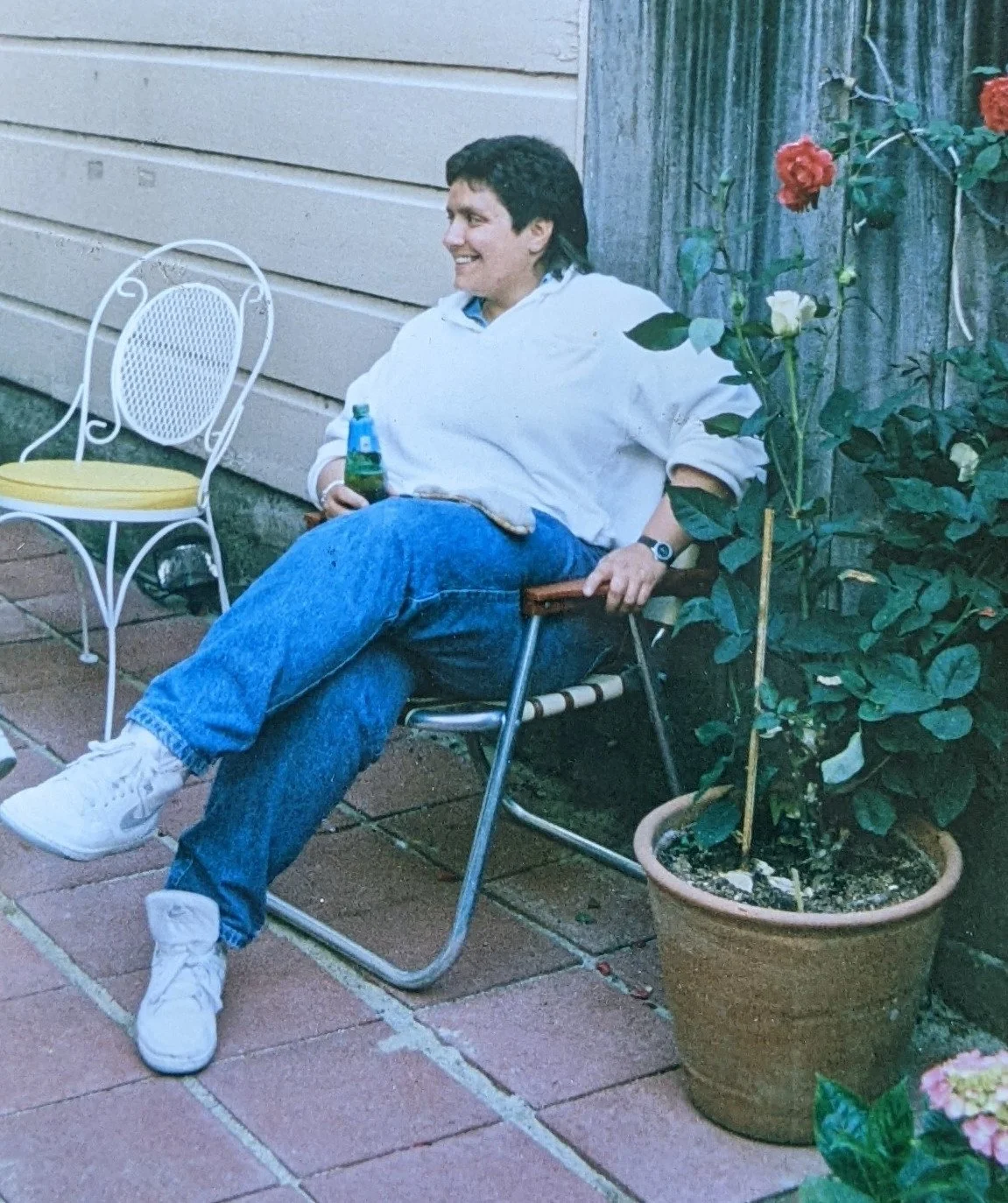
Lynn Griffis. Courtesy of Metropolitan Community Church of San Francisco Collection, San Francisco Public Library.
San Francisco’s gay/lesbian community in the 1980s wasn’t just facing an AIDS crisis, they also struggled against ongoing anti-gay violence. In 1989, in the midst of a campaign to legally establish anti-gay violence as a hate crime, MCC San Francisco made headlines when their AIDS minister was attacked in her home. The city, the police department, and the LGBTQ community rallied around the church and the minister. And when they finally solved the puzzle of who did it, the answer shocked the church.


NOTES:
On the development of the hate crime as a legal category.
Valerie Jenness and Rykett Grattet, Making Hate a Crime: From Social Movement to Law Enforcement (Russell Sage Foundation, 2004).
On the history of work against queer bashing and anti-LGBTQ violence in San Francisco.
Christina Hanhardt, Safe Spaces: Gay Neighborhood Violence and the Politics of Violence (Duke University Press, 2013).
Randy Shilts, The Mayor of Castro Street: The Life and Times of Harvey Milk (MacMillan, 2008).
Books quoted in the episode.
Adrienne Rich. On Women and Honor: Some Notes on Lying (New York: Norton 1977).
Sarah Schulman, Conflict is Not Abuse: Overstating Harm, Community Responsibility, and the Duty of Repair (Arsenal Pulp Press, 2016),
The voices from the service after the first attack include
Rev. Troy Perry, Universal Fellowship of Metropolitan Community Churches – “If you come for one of us, you come for all of us.”
Kevin Calegari, Dignity San Francisco – “Somebody by the name of Jesus…”
Harry Britt, San Francisco City Supervisor – “It hurts to be reminded of the power of evil.”
Gayle Orr-Smith, representative of the Mayor’s Office – “I am moved when I hear you say you are an angry people.
Rev. Duane Wilkerson, United Methodist Church – “But in the event that doubt has crept into your mind…”
Rev. Troy Perry, Universal Fellowship of Metropolitan Community Churches – “And to the enemies who are attacking us…”
Music:
“The Call” is by George Herber with music by Vaughan Williams. The soloist is Bob Crocker.
“Nearer My God to Thee” is by Sarah Flowers Abrams.
“Something Inside So Strong” is by Labi Siffre.
THANKS
Special thanks to Kelsy Pacha, Dr. Janis Whitlock, Dr. Mary Hunt for consulting with us about this episode.
Resources:
Community United Against Violence – still working for safe communities for queer people.
National Alliance on Mental Illness LGBTQI Information Page
The Shanti Project - is a pioneering nonprofit that builds human connections to reduce isolation, enhance health and well-being, and improve quality of life. It innovated enduring models of attentive companionship to people facing the of life through their work during the height of the AIDS crisis.
The Trevor Project – the leading suicide prevention and crisis intervention non-profit organization for LGBTQ+ young people.
TRANSCRIPT:
Episode 06 – Attacked
NOTE: This audio documentary podcast was produced and designed to be heard. If you are able, do listen to the audio, which includes emotions and sounds not on the page. Transcripts may contain errors. Check the corresponding audio before quoting in print.
Lynne Gerber: Before we start today’s episode we want to let you know that this episode discusses physical and verbal violence against LGBTQ people. Please take care when listening.
Lynne Gerber: On a Sunday evening in July, 1989, MCC San Francisco's worship service started with an announcement. It was read by a board member, Linton Stables.
Linton Stables: In recent weeks, the Metropolitan Community Church of San Francisco and its staff have been subjected to written and telephone threats of the most vicious nature. On Wednesday of this week, these verbal threats turned to physical violence.
Lynne Gerber: Jack St. John, the preacher that evening, used the sermon to express his response to the news. He was as emotional as Linton was matter-of-fact.
Jack St John: this was my first thought. Why? Why is this happening now when our evening service has grown and when people have come to us for healing
Lynne Gerber: The violence had come after weeks of anonymous threats and mounting fears. Kitt Cherry, a minister in training at the time, remembered the letters the church received in those weeks. And its struggle to figure out how to respond.
Kitt Cherry: I thought we were making too much of these few hate letters that we got.
Kitt Cherry: We were too busy doing all that positive stuff to give energy to these negative messages by a bunch of, a few cranks who didn't really know what they were talking about
Lynne Gerber: An MCC minister named Lynn Griffis had organized a staff meeting to figure out what to do about the hate mail.
Kitt Cherry: Lynn organized to have a guest speaker at one of our big staff meetings, and it was Melinda Paras from Community United Against Violence. And she was supposed to talk with us about how to deal with the hate mail that we received and the potential threat of violence by hate groups that didn't approve of lesbian and gay people.
Lynne Gerber: But when the meeting Lynn organized began, she wasn’t there.
Kitt Cherry: She wasn't there so we went ahead and started the meeting without her. And the phone call came in, It was shocking news
Lynne Gerber: That Sunday evening Linton, the board member, told the congregation what they knew.
Linton Stables: Our assistant pastor and AIDS chaplain, Lynn Griffis, was attacked in her home by an intruder
Kitt Cherry: She said that someone had broken into her garage
Linton Stables: who had spray painted anti gay and anti PWA epithets on the wall of her home.
Lynne Gerber: PWA means People with AIDS.
Kitt Cherry: used red spray paint to spray the message “die with your fags” on the inside wall inside the garage
Linton Stables: when she arrived, Lynn was struck in the face with a shovel and received several lacerations
Jack St John: I have never in my life had to worry about walking down the street and wondering if the steps that I heard behind me were someone with a gun or a knife or a shovel to hit me in the face.
Linton Stables: She was treated at a hospital emergency room was released and is recovering physically and mentally.
Jack St John: This has been a place that has been safe for us. And we do not need a spirit of fear now in this place.
Lynne Gerber: AIDS wasn't the only issue facing the Castro community in the 80s. And it wasn't the only issue facing the movement for gay and lesbian rights. Queer bashing was a reality in San Francisco and around the country.
Linton Stables: Lynn says, What I experienced was not an isolated attack against me as an individual, but part of an overall violence that is committed against lesbian and gay people and people with AIDS.
Kitt Cherry: It created this whole incredible atmosphere of fear and tension and insanity almost at our church,
Lynne Gerber: Countering anti-gay violence was a major priority for the gay rights movement. And in the Castro, it felt personal to everyone.
Linton Stables: We are angry. We will not be intimidated by violence or threats of violence.
Jack St John: My first inclination as a good co…
Lynne Gerber: He means a co-dependent.
Is to talk about this person and how lonely they must be and how sick they must be, and I am not going to say this tonight. This person who has done this thing to us has for me epitomized the opposite of what we have been striving for and working for in this place day after day and week after week, and I at this moment Do not wish to give them the benefit of any doubt.
Lynne Gerber: The attack on Lynn, their AIDS minister, forced MCC to grapple intimately with hard questions. How should queer Christians respond to anti-gay violence? And to the people who perpetrate it? Questions that kept changing shape as the story unfolded.
It forced us to grapple with hard questions too. We didn’t know about these events at all until a student, digitizing a tape, took off his headphones and announced that he didn’t understand what he was listening to. That he was hearing something so different in tone from what he had heard before that he wasn’t sure it was even from the same church. When we started asking questions about the attack and its aftermath, some folks thought they were some of the most significant events in the church’s life. Others had forgotten them. And others still thought we shouldn’t tell this story at all. The more we learned, the less we knew what to make of it. Which came to feel surprisingly appropriate.
Kitt Cherry: It was a very scary intense time.
Lynne Gerber:This is When We All Get to Heaven. Episode 6 – Attacked. I’m Lynne Gerber.
Lynn Griffis: There once was a little girl, and she was from Nebraska. And they told her that she would never be a pastor. And they told her that she didn't deserve to have a community because of the way she loved.
Lynne Gerber: That's Lynn Griffis, the minister at the center of the violence, consecrating communion on Gay Freedom Day 1989– what we call Pride now– – two and a half weeks before the attack. Lynn and Kitt were two of the women on the church's staff in the late 1980s. MCC was a feminist church and the congregation was committed to gender equality in the church's leadership. So even if the congregation itself was, say 80% men and 20% women, the leadership visible on the pulpit every Sunday always aimed for 50/50. Recruiting women to the clergy was an ongoing effort. Recruiting them to the congregation was too.
Kitt Cherry: My first role there, when I was a student clergy, was Women's Programming Coordinator.
Lynne Gerber: That's Kitt again.
Kitt Cherry: The women's community at MCC San Francisco, I now know, waxes and wanes over the years. So, they, like, build up, and then a lot of women leave. It's mostly men, and then it builds up again, and then it goes down again, so I was a big part of building it up again, starting in 1987.
Lynne Gerber: Lynn joined MCC San Francisco in 1988 a few years after Kitt.
Kevin Fong: We were hurting for women.
Lynne Gerber: That's Kevin Fong. He was an active MCC member and a strong supporter of women in the church. This is how he described Lynn.
Kevin Fong: she walked in the room, and you could not help but notice her, so she had this striking presence, this striking physical presence, but just everything about her was powerful, beautiful, awe inspiring.
Lynne Gerber: She had been a student at a Lutheran seminary and told folks she left because that church and that seminary wouldn't ordain an out lesbian.
Kitt Cherry: She was, different from anybody I'd known.
Lynne Gerber: From the beginning, Lynn made an impression.
Kitt Cherry: Oh my god, they just loved her and she could get them like pounding their feet,
Lynne Gerber: But charisma can be fickle. And that impression was complicated.
Kevin Fong: I loved her and was intimidated by her. I accepted her. And was also a little suspicious of her.
Lynne Gerber: Lynn and Kitt both started at MCC as congregants. Both went to seminary at about the same time and became student clergy. Kitt worked in women's ministry, and Lynn worked with AIDS. There was tension between them. In part because the congregation itself was completely taken by Lynn. The church installed her as the AIDS Ministry Chaplain in early 1989, when the magnitude of AIDS was overwhelming for everyone. This is Lynn speaking to the congregation after a really hard week.
Lynn Griffis: Even though we don't know the names and faces of people who have died, we hear it in church announcements. And it indeed affects us. Two completed suicides, two deaths from AIDS, and my own, and your own, continued vigil of work and care in being with those afflicted by AIDS. HIV disease or other life threatening or chronic illnesses.
Lynne Gerber: There was celebration in that season too. Like that 1989 Gay Freedom Day we just heard, when Lynn consecrated communion by talking about being a young, queer girl from Nebraska. This is how she ended it.
Lynn Griffis: And now that little girl from Nebraska is celebrating communion on Gay Pride Day in the middle of the Castro.
Lynne Gerber: But even that day's celebrations were infused with queer loss. Cleve Jones– a longtime Castro activist – preached that service, telling the story of how he got the idea for the AIDS quilt. And he talked about being queer-bashed and how that got him to act on the idea.
Cleve Jones: Being stabbed like that, and being beaten like that, uh, It brought back for me, in about two seconds, what it felt like to be a sissy at Scottsdale High School. Uh, getting beat up, the vulnerable, pathetic, weak feeling of not being able to strike back.
Lynne Gerber: Gay Freedom Day was all about countering those feelings with Pride. But the shame of violence in the past and the spectre of violence in the present never went away. Two weeks after that Gay Freedom Day, Lynn was installed again, this time as the assistant pastor.
Unknown Man: Lynn, will you offer compassionate care towards all who are living with the HIV infection, other life threatening and chronic illnesses and disabilities, including their partners, families, and friends, and will you repudiate constantly any condemnation, rejection or judgment against those who are living with HIV.
Lynne Gerber: It was a position with more responsibility, more authority, and potentially more visibility.
Lynn Griffis: I will, and I ask God and this community to help me.
Jim Mitulski: Lynn, will you participate in life giving relationships of honesty and integrity among our church staff? Will you share the tasks that will build up our community of faith?
Lynn Griffis: I will, and I ask God and you and this community to help me.
Lynne Gerber: The church knew the magnitude of what they were asking her to do. And that she couldn't do it alone.
Unknown Woman: I pray Lynn always have an abundance of people around her to help her when her own arms won't be able to reach all those who are coming for AIDS ministry.
Lynne Gerber: But they didn't know she would need them just three days later, when everyone heard she was attacked in her home with a shovel. And that she would need them even more fifteen days later,. when Jim announced she was attacked a second time.
Jim Mitulski: Okay, so I want to summarize. What's going on this week? It's not been a typical quiet week in the life of our church.
Lynne Gerber: The Sunday after the second attack on Lynn, Jim caught the congregation up on all that was happening.
Jim Mitulski: As you know, we've been receiving various kinds of death threats and, violent communications. Lynn was attacked in her home, two weeks ago.
Lynne Gerber: The first attack had been a major event in the city. All the city's newspapers reported on a lesbian minister being assaulted in her home. There was a long history of tension between the San Francisco Police Department and the gay/lesbian community but the police responded right away, assigning detectives, issuing reports, and offering rewards. The second attack was an all-out crisis and everyone was watching.
Jim Mitulski: On Wednesday near her home in the Haight, Lynn was abducted and taken by two men into a car where she was verbally and physically abused for a period of time and then released and they sent her back as a message to her, to me, to all of us to stop what we are doing, quote. And it was two skinheads as she described them who attacked her.
Lynne Gerber: Newspapers reported that her attackers had cut something onto her chest. Police refused to say what it was. Religious, political and gay and lesbian leaders showed up in church the Sunday after to express their outrage, concern and support.
Troy Perry: First, I want to say, and I'm going to take 90 seconds, I want to say number one is, when you mess with one of us, you mess with all of us in the Universal Fellowship of Metropolitan Community Churches
Kevin Calegari: Somebody by the name of Jesus went through just what Lynn is going through and Lynn bears those wounds, those of Jesus on her body. As we bear those wounds. The nice part of the story is that it has a happy ending, and that we're all going to be resurrected, and this morning is a part of that resurrection.
Harry Britt: And when something happens, like happened with Lynn, it really hits you, because we know about the power of love, but we are It hurts to be reminded of the power of evil,
Gayle Orr-Smith: I am moved when I hear you say that you are an angry people, you have every right to be angry. Angry and outraged that in America, a land of a free city like San Francisco that embraces so many cultures, so many people that we should tolerate or that even we should experience incidents like what happened to Lynn,
Lynne Gerber: Frank Jordan, the chief of police, announced that the police department was all in on finding Lynn's attackers.
Frank Jordan: And I can assure you, I come here today in a spirit of cooperation, friendship. communication and certainly concerned for what happened. And not only from my point of view as the chief of police, but for the San Francisco Police Department, for the entire rank and file that we are just as concerned as you and we are full partners in this outrage San Francisco is a very tolerable city, but we will not tolerate this kind of activity, right from the top. And I want you to know that from me.
Frank Jordan: also contacted the Federal Bureau of Investigation, and we feel for two very good reasons. We want them involved in this case, too, because of the civil rights violation implications here. We think that's going to send a very clear message.
Lynne Gerber: And ACT UP, the AIDS Coalition to Unleash Power, offered to step up where the police department left off.
Michael Thompson: as AIDS activists, we, We were very disturbed to hear about what has happened and how it represents the escalation of violence against lesbians, gays, and people working in AIDS and as a group that meets in this church and utilizes the sense of community that is here and the sense of peace, which MCC brings to San Francisco, we decided that we had to do something, because Lynn's work and our work, while we may work kind of out there in the streets making people mad, Lynn works with the people, she works daily, she works spiritually with everybody. And so we've all agreed that we're going to donate whatever time we can as an organization and as individuals within ACT UP. security or the surveillance that they need.
Lynne Gerber: It was terrifying and triggering. It was a mystery and a tragedy. And it seemed clear who was innocent and who was guilty. Who was good and who was bad.
Duane Wilkerson: but in the event that doubt has crept into your hearts and your minds, let me say that you are good people and the ones who are filled with fear and hatred and bigotry. They are the sick ones.
Lynne Gerber: It seemed clear who their friends were...
Troy Perry: and to the enemies who are attacking us. We say to you, we're not closing up shop. We're just starting a revival here at Eucharika [sic] Street at Metropolitan Community Church. And we're going to go on. God bless you this morning. Amen.
Lynne Gerber:Another person who addressed the church that morning was Melinda Paras from Community United Against Violence, or CUAV. She's the woman Kitt talked about meeting with when she heard the news about the first attack. CUAV was doing pioneering work on hate crimes against gay men and lesbians.
Melinda Paras: It's really unfortunate, it's really frightening in some respects, to think about the fact that for our movement to exist, one of the first community agencies that had to be established for the lesbian and gay community in San Francisco was not a lesbian and gay community center. One of the first agencies that had to be established was Community United Against Violence.
Lynne Gerber: A lot of gay, lesbian and queer people have histories of violence that are intimately connected to gender and sexuality. But this place, the Castro, San Francisco, 1989, was made up of people from a generation that had had nowhere to go with the violence they experienced -- the beatings, the harassment, the threats, the pain. And in this place they were experimenting with making a world that would take that violence seriously -- seriously enough to speak to it as a community and to force power to respond.
Melinda Paras: There is racist violence, anti semitic violence, all kinds of violence that's established. But, often times people look at the lesbian and gay community and say, Well, if you weren't so public, then no one would attack you. Right? if you didn't proclaim yourselves, there wouldn't be any violence. And the problem is we are who we are. That's, that's not meant to provoke anyone. That's meant to be at peace with ourselves.
Lynne Gerber: CUAV was one of a number of gay/lesbian groups around the country that were strategizing a national response to violence against gays and lesbians. One that worked with other marginalized groups to create the very category of a hate crime and create new penalties for it. When the attacks against Lynn began, the House of Representatives had just passed legislation to start keeping federal records of hate crimes. Establishing the prevalence of hate crimes would help support future laws against them. This was the first step toward what would become the 1990 Hate Crime Statistics Act.
Melinda Paras: And unfortunately, our movement will have to be a movement that not only proclaims ourselves and our dignity and who we are and our identity, but unfortunately, we will also have to be a movement that learns to protect itself.
Lynne Gerber: The attacks against Lynn were a prime example of what places like CUAV were fighting against. They were a kind of terrible evidence supporting a major priority in the organized movement for gay and lesbian rights. And that Sunday morning after the second attack, Lynn herself was a riveting symbol.
Lynn Griffis: Thank you. It's good to be home. It's good to be back at work. I was physically and verbally assaulted. It was a horrifying and terrifying experience. Both times. They didn't tell me that this was in my job description when I said I would take this job.
Lynne Gerber: She asked people not to talk about her injuries.
Lynn Griffis: please do not speculate on the nature of injuries, verbally or otherwise. Some of that information necessarily needs to be kept secret and, um, there are only a few people who know truly what the nature of those are and, um, it's very vital to the prosecution if they indeed find the perpetrators of this violence that some details of this case remain. closeted.
Lynne Gerber: She told them to trust that the police were doing right by her.
Lynn Griffis: the police department has responded beautifully, respectfully, compassionately, and lovingly to me
Lynne Gerber: The last thing she said was that the violence she experienced was not going to stop her.
Lynn Griffis: The other thing I'm going to leave you with today is something that I told, uh, one of the elders in our denomination last week, that if anything happens to me, which I believe it's not going to any longer, I think I'm, it's my prayer that the violence has stopped, that I've never been more proud to be a part of a community, to be a pastor, which I've wanted to be since I was a little kid, and to be, uh, A pastor in this church was and will be a dream come true. That if anything were to happen to me, I want you to spread the message loud and clear, far and wide that I was proud that if anything happens to me, that, um, I died happy. Um, I, I've never been happier to be in a place or filled with more courage. Mainly because of the energy that you as a community have provided me in prayer and love and flowers, cakes. Thank you. The way to my heart...
Lynne Gerber: The service conveyed every assurance that police, community, church and neighbors were all outraged at what had happened to Lynn and that they would pursue and keep pursuing whoever did this to her. The media released drawings of the suspects and descriptions of the car used in the attack. The SFPD, working with the FBI, announced that the mayor had doubled the reward for finding the perpetrators.
Kitt Cherry: there was also a big rally, like a march. on her behalf, So they actually had like hundreds of people marching in support of her. It went beyond our church into the larger gay community of San Francisco, rallying to her defense.
Lynne Gerber: And people were talking.
Kitt Cherry: you know, we just couldn't figure out who was doing it. Some people were like, why are they focusing on Lynn? They haven't attacked Jim yet, he's the pastor. But I didn't really think too much about that. It just seemed like maybe she's more vulnerable, more accessible, and identified with AIDS.
Lynne Gerber: One week later, on the next Sunday, everything had changed. Again.
Jim Mitulski: What we're going to do this morning is, we have some things to share with you to talk about with you. and then we'll kind of rejoin the order of worship where we left off.
Lynne Gerber: The structure and tone of that service mirrored the last few weeks. But the content brought the congregation into a whole different world. Linton read yet another statement from the board telling the congregation the latest news in the unfolding story of violence against Lynn Griffis.
Linton Stables: On Thursday, August 3rd, the following sequence of events occurred. Jim Mitulski, Lynn Griffis, Melinda Paras from CUAV, Jean Harris from Harry Britt's office, and a representative from the Mayor's office met with Chief of Police Frank Jordan, and other police officials at Chief Jordan's office. The purpose of the meeting was to review the evidence concerning the July 27th attack reported by Lynn Griffis.
Kitt Cherry: And how I found out about it was, a normal workday, I was calling the church office to discuss something, A different person answered the phone, a member of the congregation, and he said something terrible has happened. And I immediately thought, oh, another attack on Lynn? He said, no, it's worse than that. So then I said, Someone killed Lynn? He said, it's worse than that.
Linton Stables: The conclusion of the police department was that the evidence did not support the allegations made by Lynn. Forensic analysis indicated that the injuries sustained in the reported attack appeared to be self-inflicted. Lynn then admitted that her initial report to the police was not accurate and she provided a revised statement of events. Based on Lynn's revised statement, the police are continuing their investigation and evaluation of the facts. Preliminary police assessments indicate that the revised statement also may not be true.
Kitt Cherry: So. I'm in suspense as he gets Jim on the phone and then Jim says they had a meeting with the police and the police pointed out all these inconsistencies in Lynn's story and basically said that the wounds were self inflicted and that she had fabricated the stories and sent the death threat message herself. And I was so stunned. That I couldn't breathe. I was just stunned.
Linton Stables: We are puzzled by these events and can only hope that Lynn will seek assistance. While we honor her work and her contribution to our community, we hold her accountable and responsible for telling the truth. The Metropolitan Community Church of San Francisco remains committed to the elimination of anti lesbian gay violence. We will continue to respond to reports of such violence and we will continue to insist that these reports are fully investigated and the perpetrators brought to justice.
Kitt Cherry: It was unthinkable, and at the same time, it made a lot of things I had never been able to figure out come, fell into place, and it kind of made sense,
Lynne Gerber: Lynn wasn't a victim. But was she an attacker? Or maybe she was both. She attacked herself. Or the church. Or the gay/lesbian community. Or all three. Was the church an innocent victim of a hate crime? Or was it an accomplice? Or maybe some other kind of victim? A not wholly innocent one? There was so much painful stuff to attend to.
Linton Stables: The board of directors recognizes that there is a wide range of emotions and responses that we are all experiencing as a result of these events. We are committed to an open and honest dialogue about the facts as we know them, and, to providing a safe environment for the expression of our feelings.
Lynne Gerber: Linton, announced a community forum, a church wide group session, groups for women, for people with AIDS, special prayer services, counseling for congregants and staff. Gay/lesbian organizations that had stood with Lynn the week before, stood with MCC now, offering counseling and other services to the shocked congregation. Jim tried to help them make sense of what had happened. What was true -- and what was a lie.
Jim Mitulski: Certainly the second incident in the way it was told our fabrications and that the wounds were self-inflicted and we don't know about the first one. I will also tell you honestly, I personally believe that perhaps the first one was also fabricated as well as the written death threats against me and against the community.
Lynne Gerber: How should people feel about the care they had received from Lynn? What should they do with the anger they felt? Or the love?
Jim Mitulski: Lynn's professional work here was very good. There were things that we could not have seen, that we didn't see. But if you're a person that she helped, if you're a person that she saw in the hospital or that counseled you, and, if that was a good experience, this does not change that, that isn't taken away from you.
Lynne Gerber: What about Lynn herself -- who had left the church and the city with no explanation, no apology, and no goodbye.
Jim Mitulski: We made arrangements for Lynn to go to a very good hospital if she was willing to. She was not willing to. Lynn is not in our contact or in our control anymore. That does not mean that she is not in our prayers. I believe it's very, very important that we love her still, that we express compassion for her.
Lynne Gerber: Then there were the responses from the public.
Jim Mitulski: I want to quote just some of the things that people have said because I, I think they're, they're true. people have said to me or on our phone machine, I'm a person with AIDS and I trusted her. I'll never come back to your church. How can you call yourself a Christian church? You should apologize to the straight community for the, the ill feelings that have come up. No one will ever, this is a person saying, no one will ever believe us again. How can I have missed it? I've said this one about 50 times. how can I have missed that this could be true or that, that, the possibility for this? Others have said, you know, I had the same thought. I was afraid when it happened the second time I thought this, but it felt disloyal to express it and somehow not honoring the trauma. Some have said, still, Lynn wasn't lying. Somehow, in spite of the evidence, it's true. Another person suggested that it would perhaps, or she wanted to hope it was like an FBI plot perhaps to disrupt our community.
Lynne Gerber: And there was the damage to a people and movement who had known so much violence and was working so hard to stop it.
Melinda Paras: Geez, was it last week I was here? Feels like a year ago.
Lynne Gerber: Melinda Paras from Community United Against Violence stood with MCC San Francisco that morning. Despite the damage that Lynn might have done to CUAV's work.
Melinda Paras: I'm glad those incidents weren't true. I'm glad that there are not people trying to attack us. And, and on that scale right now. But it's very important for us to know that it could well be that, that the attacks against the lesbian and gay community, the kind of violence and hatred that is out there is very strong. It's still very powerful and it could reach that stage. And that is not paranoia on our part.
Jim Mitulski: Let’s pray together…grant oh loving god…
Lynne Gerber: That morning, three days after all this had come to light, they prayed. They prayed for everyone -- for Lynn, her parents, the people betrayed by Lynn , the whole gay and lesbian community and the church. Like they were trying to touch every painful place and contain it with delicate, deliberate words of prayer. And then there was Kitt. Who had been student clergy with Lynn. Who served on MCC’s staff with Lynn and watched as Lynn got installed in new position after new position. And who was planning to be consecrated – to make her own public commitment to the ministry and officially become clergy – that very Sunday.
Jim Mitulski: Our consecration of Kitt to the ministry today. You know, we thought about not doing it because it's a difficult day.
Kitt Cherry: I'd invited all my friends and some special people who were going to help administer the vows to become a clergy.
Jim Mitulski: And, uh, it's important to do in the midst of this. We have a future. Women have a future in the ministry. I want to affirm that. Uh, we've been committed to that as a congregation, and that needs to be stated again and again and again.
Kevin Fong: And so that, it was that very Sunday that, was a focus on Kitt and, It was a big thing for her. And then, the incident happened and so it all, the spotlight went from Kitt to Lynn. And my thing, being really, really a fierce advocate for the women who are close to me, was Kitt. It's like, heck, this was supposed to be Kitt's day
Jim Mitulski: We prepare to consecrate Lynn, or Kitt…
Kitt Cherry: I thought it was good to keep it on that same day to. Remind people that God is still there and life goes on and I also didn't want whatever she did, to change what I already had planned of becoming a clergy and devoting my life to serving Christ. So we went ahead and that was an incredible Sunday
Lynne Gerber: And so, echoing Lynn’s consecrations of the last few weeks and the last few months, Kitt committed her life to ministry.
Jim Mitulski: you are to preach. to declare God's forgiveness, to pronounce God's blessingKitt, do you believe that you are truly called to the clergy by God and by the church?
Kitt Cherry: I do.
Jim Mitulski: Do you now, in the presence of the church, commit yourself to this trust and this responsibility?
Kitt Cherry: I do.
Jim Mitulski: Will you be diligent in seeking and seeking the knowledge of such things as may make you a stronger and more able minister of Christ?
Kitt Cherry: I Will
Jim Mitulski: Will you endeavor to minister the word of God and the sacraments of the new covenant, that the reconciling love of Christ may be known and received?
Kitt Cherry: I will.
Jim Mitulski: Beloved I present to you the Reverend Kittredge Cherry.
Kitt Cherry: On that day of my consecration, people started coming up to me apologizing, saying I was dazzled by Lynn, and I lost sight of who you were, of how you were, and how you were a good clergy person, too. So, yeah, for me, it was quite a bit like a vindication
Lynne Gerber: The weeks and months after this all unfolded were hard. Really hard. A week after she left, Lynn was interviewed in the San Francisco Sentinel, one of the city's gay papers. From her parents’ home in Nebraska she insisted her story was true. Her picture was featured on the cover under a headline that asked Hoax? It depicted a cross cut into her chest just below her clerical collar. People talked about the story for months.
Kitt Cherry: It was hard to even stop thinking about this. It was like obsessive and everywhere I'd walk in the Castro I'd run into people from church and they'd be like I'm reading a book about Jim Jones and the People's Temple. I'm reading a book about Jonestown. They were all, reading about cult leaders.
Lynne Gerber: On the anniversary of the first alleged attack Jim preached about Lynn, these events, and what the congregation had been through. To make sense of it, he turned to one of his own personal scriptures.
Jim Mitulski: I'm gonna quote my, my other scripture that I use a lot, the lesbian writer Adrienne Rich. she talks about that feeling, that emotional feeling that I think the whole church went through a year ago. “When someone tells me a piece of the truth which has been withheld from me and which I needed in order to see my life more clearly, it may bring acute pain. But it can also flood me with a cold, sea-sharp wash of relief. Often such truths come by accident, or from strangers.” And that's what I think happened to us as a whole community a year ago at a time that was very painful.
Lynne Gerber: He told the congregation -- some of whom had lived through these events and some of whom had not -- about what had happened the year before. And about some of what they learned about Lynn since she left and some of the things she had done.
Jim Mitulski: She was a victim, I think, of, of terrors, but they were interior terrors and not from the outside. And that revelation led to even more revelations that proves that the story really didn't happen a year ago, it happened two years ago, or when she first started coming to the church. That in the year other involvement in the church, she was involved in relationships with a number of people that were abuses of power. either financial, or sexual, or just kind of mental, it's hard to explain that exactly, but a kind of terrorism, an inequality of power.
Lynne Gerber: Stories surfaced in the media and in the community that Lynn was having sexual relationships with multiple women in the congregation, each unbeknownst to the other. She had also borrowed money from some of the men. And she seemed to have targeted some people for intense emotional manipulation. Including Kitt.
Jim Mitulski: And, but no one was talking about it at the time, clearly at least, it was very hard.
Lynne Gerber: He talked about the lessons he was taking from this story.
Jim Mitulski: One thing I learned is this. When you're in an experience of betrayal, or when reality is shifting, or when you're in a crisis, tell the truth as you understand it. Tell the truth. Usually I talk about telling the truth in a political sense. I think that's important. But this is political in the best sense. Our lives with one another. Tell the truth. I think that there were some things that we understood. Some things we didn't understand. But the telling of the truth, even as it wasn't clear, as it was unfolding, as it was murky, as we were making our best efforts to bring out into the open what was happening. It's in that telling of the truth that our setting free and healing has come. It was very difficult to admit for myself that I made mistakes, terrible mistakes, you know, uh, it was very difficult for our board to say, well, we made a mistake. It's difficult for our congregation to say we made a mistake. And as the pieces became clearer to tell the truth about those were very difficult to do.
Lynne Gerber: He talked about how certain things that were important to him and to the life of the church could have made it hard to see what was right in front of him. Things like his commitment to women's leadership.
Jim Mitulski: For me, around Lynn, if you can imagine, this is a student that I mentored as a seminary student, that keyed into my wanting to see there be a female assistant pastor here, someone who I liked too. The betrayal, the personal betrayal I felt, and then the, when I saw the effects of that, had been very hard to live with
Lynne Gerber: It wasn't easy to talk about this a year later, just as it was all settling down. But Jim didn't want a culture of silence to build up around the story. That was part of the problem in the first place.
Jim Mitulski: If this was hard, I apologize. I felt it was important, a year later, to bring it out, to look at it. Because there's one thing I know about this whole incident that happened then. I never want it to be a secret in the life of our church. It really did happen. It was really awful. Lynn was not really awful. The whole situation was really awful. It's not about her. But it did happen. And from time to time, we need to look at it so that we learn from our mistakes, so that it never happens again. And so that we reconnect constantly, continually with the power of God to refresh. to revitalize and to renew and to heal. Amen.
Lynne Gerber: Lynn never came back to MCC San Francisco.
Kitt Cherry: She did send flowers to the funeral when Ron Russell-Coons died, with a note saying, I loved him too.
Lynne Gerber: No one I talked to had heard from her since. And in retrospect folks thought a lot about these events happening in the midst of the overwhelming storm of AIDS. About living through a scandal in the midst of a catastrophe.
Kitt Cherry: One thing I'd like to say as I've reflected on this event with Lynn Griffis over the years is it really is connected to the AIDS crisis and to the homophobia against LGBTQ people because those things made us vulnerable as a community to her, her lies. One reason that,the incidents with Lynn Griffis happened was because they needed so badly to have somebody help with all the AIDS patients, and all their spiritual needs, and all their need for hospital visits, and comfort, and care. It was overwhelming. People were dying. There were only a few people willing to help. So when she got up there and said, Yes, if you make me Assistant Pastor, I'll take care of everybody with AIDS, and we're going to be a community that handles all the needs of people with AIDS and all the needs of gay and lesbian people in our circle, everybody, almost everybody, wanted to believe it and did believe it. Because we needed that. We couldn't do it on our own. We felt like we couldn't do it on our own, and it was hard to have faith in God. It was easier to have faith in Lynn Griffis
PART F
Lynn Griffis: I wonder what it would be like if I lived my life as a forgiven child of God, released from my sin, free to be all of whom I've been created to be.
Lynne Gerber: About a year before the alleged attacks, Lynn preached a sermon about a famous gospel story, the woman caught in adultery.
Lynn Griffis: I wonder what it would be like if each of you lived your lives firm in the conviction and the belief that you are forgiven people, children of God, created in God's image.
Lynne Gerber: This woman was brought before Jesus by a group of men who wanted her to be stoned for her sin, as the law required. Jesus said that the man without sin should cast the first stone. There was no such man so the group left, leaving Jesus alone with this woman. He asks if anyone had condemned her and she said no. "Neither do I condemn you," Jesus said. "Go and sin no more."
Lynn Griffis: As I often do with biblical passages, I wanted the ending to this story. I wanted to follow that woman around and perhaps know what the rest of her day was like that day. To know how she lived the rest of her life in the light of Jesus powerful forgiveness and release from condemnation.
Lynne Gerber: In a book called Conflict is Not Abuse, author Sarah Schulman writes “Never, ever decide that you know who someone is, what they did, their objective, context or goal, how they feel or what they know, until you ask them. Not asking means a direct investment in not understanding the truth.”
Lynn Griffis: There's a contingent of feminist sisters, and perhaps you're here, who would want me to preach about this woman. You want to hear me talk about her pain, her fear, her emptiness, her adultery, her abuse.
Lynne Gerber: Lynn died in 2024 before we could ask her anything about these events and what they meant for her. And we had a hard time finding anyone who would speak with us about the years between these events and her death. We reached out to her family and to friends and learned what we could. That she had become a glass artist. That she had a wife whom she loved dearly for over a decade. And when her wife was diagnosed with a fatal cancer, Lynn took exquisite care of her. Her cousin told us Lynn had the best heart and a rough edge. And that her wife’s loss devastated her. The cousin hadn’t heard about these events at MCC San Francisco, but when we told her she didn’t seem shocked. She said Lynn seemed to have a lot of pain.
Lynn Griffis: But what struck me the most profoundly in this text was the last line. Neither do I condemn you. Go and sin no more.
Lynne Gerber: We’ve struggled with what meaning to make of this story. A struggle made harder by hearing a lot of strong feelings about it – and by not hearing her perspective at all. We were tempted to skip telling it entirely. Until we heard Jim telling the congregation that keeping these kinds of stories secret lets harms be perpetuated.
Lynn Griffis: What Jesus did was to exchange life with this woman. To forgive is to breathe life into the life of another human being who is hurting and fearful and empty. It is to receive life, and in the receiving, to give it back.
Lynne Gerber: Lynn was 27 when these events happened. She was young, but also an adult. She was doing brave ministry in an ostracized community at a terrifying, overwhelming moment. She was accused of doing some really painful things and causing some real harm. Pain and harm directed at others and pain and harm directed at herself. Because we didn't get to talk to Lynn, we don't want to speculate on what these events were about for her. But we do want to end with her voice, in a moment before the attack – and before all of this unfolded.
Lynn Griffis: I believe that this text confronts each of us with the ways in which we breathe life into one another or the ways in which we obstruct breath. The ways in which we withhold life by withholding forgiveness. And just as the disciples were shocked, I believe deeply shocked by the way that Jesus revealed himself to a woman by forgiving her. So it is that we are shocked and a little bit taken aback when people forgive us really. The kind of forgiveness that washes us clean. That makes us brand new. That restores our life. that helps us to breathe more deeply and fully, that brings us from a bent position to full stature in the way that God created us to be and to live.
Next time on When We All Get to Heaven. A Sermon.
Jim Mitulski: I was on the plane, and in the way the universe has of arranging these tortures, the person next to me, um, started out by saying, uh, Are you a basketball fan? And, I don't know. I have old, old fashioned homosexual values. I looked at him and I thought, No.
CREDITS
When We all Get To Heaven is a project of Eureka Street Productions and is distributed by Slate. It was co-created and produced by me, Lynne Gerber, Siri Colom and Ariana Nedelman.
We’re so glad you’re listening and we want to be connected with you. Please take a minute and follow us on Instagram at Eureka dot Street. You can also sign up for our newsletter on our website at heavenpodcast.org.
Our story editor is Sayre Quevedo. Our sound designer is David Herman. Our first managing producer was Sarah Ventre. Our current managing producer is Krissy Clark. Tim Dillinger-Curenton is our Consulting Producer. Betsy Towner Levine is our fact checker. And our outreach coordinator is Ariana Martinez.
The music comes largely from MCC San Francisco’s archive and is performed by its members, ministers, and friends. Additional music is by Domestic BGM.
We had additional story editing support from Arwen Nicks, Allison Behringer, and Krissy Clark.
A lot of other people helped make this project possible, you can find their names on our website. You can also find pictures and links for each episode there at – heavenpodcast.org.
Our project is supported by the Henry Luce Foundation, the E. Rhodes and Leona B Carpenter Foundation and some amazing individual donors. It was also made possible with support from California Humanities, a non-profit partner of the National Endowment for the Humanities. You can visit them at www.calhum.org.
Eureka Street Productions has 501c3 status through our fiscal sponsor FJC: A Foundation of Philanthropic Funds
And many thanks to MCC San Francisco, its members, and its clergy past and present – for all of their work and for always supporting ours.